Biggest upsets in World Cup history by Ranking Difference
The World Cup has always been the place where certainty goes to die. Favourites have been eliminated on their tournament debut, defending champions sent home without scoring a goal, and sides reduced to nine men have beaten the best player on the planet. No other competition in football concentrates so much expectation, so much national weight, and so much potential for the unexpected into such a short and unforgiving window of time.
What follows is not a collection of minor surprises or narrow defeats that happened to go the wrong way. These are the results and runs that genuinely rewrote the order of world football — moments that silenced stadiums, changed careers, altered the rules of the game, and left marks on entire nations that endured for generations. They span the full arc of the tournament, from the 1950 World Cup to Qatar 2022, and together they tell a story about the game that no trophy lift ever quite manages to capture.
The biggest upsets in World Cup history
Not every surprise result earns the word upset. What follows are the moments that did — matches and runs where the gap in pedigree, expectation, and footballing weight was so wide that the result genuinely changed how the game understood itself.
USA 1–0 England (1950)
England arrived in Brazil for the 1950 World Cup having never entered the tournament before. The Football Association had spent two decades declining FIFA's invitations, convinced the competition was beneath a nation that had invented the game. When they finally showed up, they brought that arrogance with them — and met a United States side composed largely of semi-professionals, amateurs, and men who held down day jobs between matches.
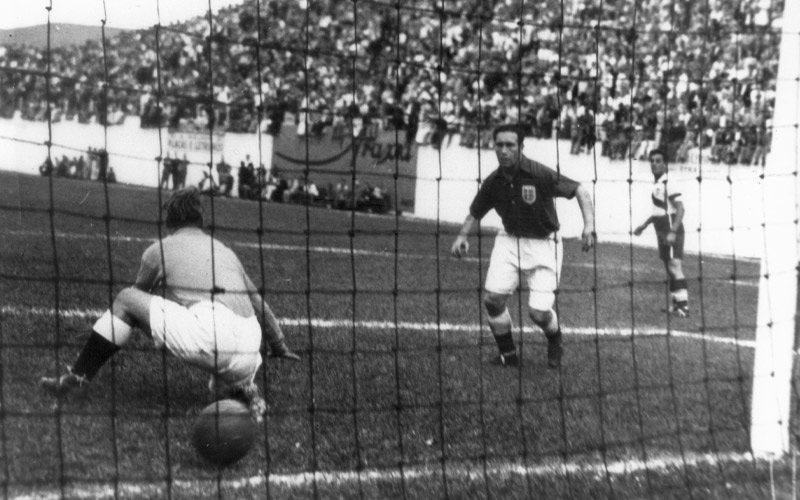
Joe Gaetjens deflected Walter Bahr's shot into the net 37 minutes in, and the score held. Back in England, newspaper editors received the result by wire and assumed it was a misprint — several ran the scoreline as 10–1 in England's favour. It was not. England lost again to Spain and went home without scoring in either defeat, their mythology of invincibility shattered in a mining city in Minas Gerais.
Uruguay 2–1 Brazil (1950)
No result in World Cup history carries more emotional weight than this one. Brazil needed only a draw in the final match of the 1950 tournament to be crowned champions. The Maracanã held somewhere between 173,000 and 200,000 people — figures still disputed, all of them staggering — and every one of them expected to witness a coronation. The Brazilian squad reportedly wore shirts with the words "world champions" printed beneath their kits. Friaca gave them the lead just after half-time and the party began.
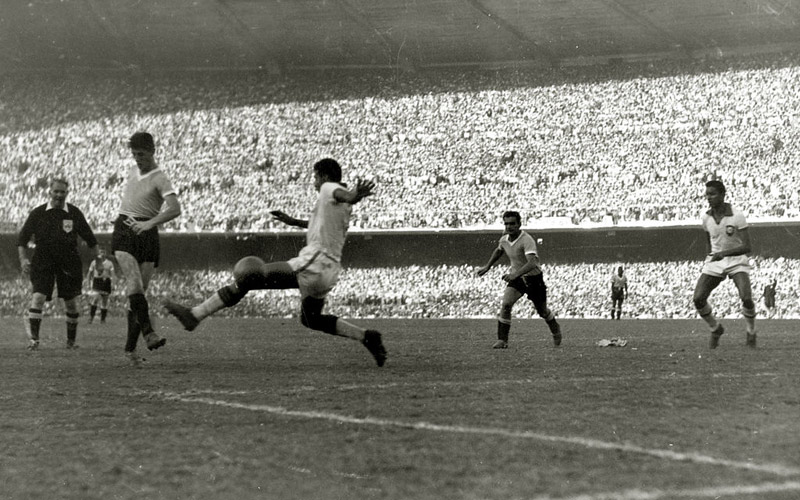
Alcides Ghiggia scored Uruguay's winner with eleven minutes remaining, and the stadium fell into a silence that witnesses described as more disturbing than any noise. The Maracanazo — the Maracanã blow — became the defining trauma of Brazilian football. Ghiggia, who died in 2015, once said that only three people had silenced the Maracanã: Frank Sinatra, Pope John Paul II, and himself. He was not wrong.
North Korea 1–0 Italy (1966)
Italy came to England as two-time world champions and one of the most feared sides in the game. North Korea at the 1966 World Cup were making their first and, for decades, only appearance on the global stage — unknown, unscrutinised, and almost entirely dismissed. Pak Doo-ik, an army corporal, scored the only goal of the game on 42 minutes. The Italians never found a way through.
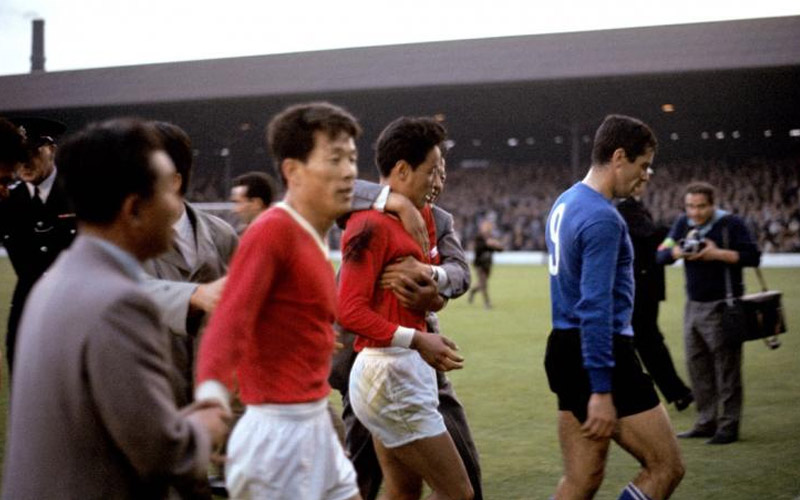
The humiliation did not end on the pitch. When the Azzurri returned home to Genoa, supporters were waiting at the airport — not with welcome banners but with rotten tomatoes and eggs. The wound ran deep for a football culture built on defensive certainty and historical authority. North Korea, meanwhile, went to the quarter-finals and raced into a 3–0 lead against Portugal before Eusébio almost single-handedly dragged the game back to a 5–3 defeat. Even in going out, they had made their mark.
West Germany 1–2 Algeria (1982)
Algeria had never played a World Cup match before the 1982 tournament in Spain. West Germany had won it twice. In Gijón, on a warm June evening, the debutants won 2–1 — goals from Rabah Madjer and Lakhdar Belloumi against a side that would reach the final. It was, by any objective measure, one of the great results in the history of the competition.
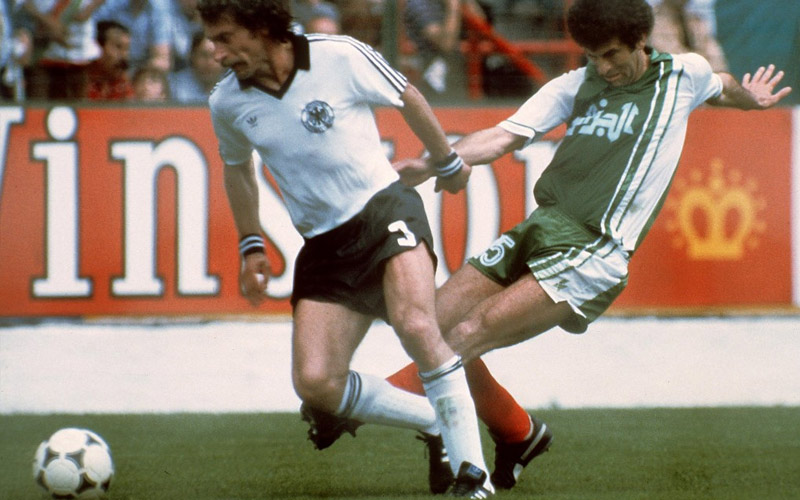
What followed made it historic for different reasons. West Germany and Austria, needing to avoid a large defeat to both advance at Algeria's expense, played out a convenient 1–0 result in their final group game, a match so transparently arranged that it became known as the Disgrace of Gijón. FIFA's direct response was to mandate that the final group-stage games in each section be played simultaneously from the next edition onwards, a rule that has protected underdogs ever since. Algeria's upset did not just shock the football world. It changed the architecture of the tournament itself. In 2014 they pushed Germany, by then world champions, all the way to extra time in the round of 16 — a reminder that the 1982 result was no aberration.
Cameroon 1–0 Argentina (1990)
The defending champions walked out for the opening match of Italia '90 in Milan facing a Cameroon side that had lost all three of their warm-up games and would finish the match with nine men. Diego Maradona was the best player on the planet. The result was not supposed to be in doubt. François Omam-Biyik's header somehow crept past Nery Pumpido, Cameroon spent much of the second half reduced to nine men through recklessness, and the scoreline held.
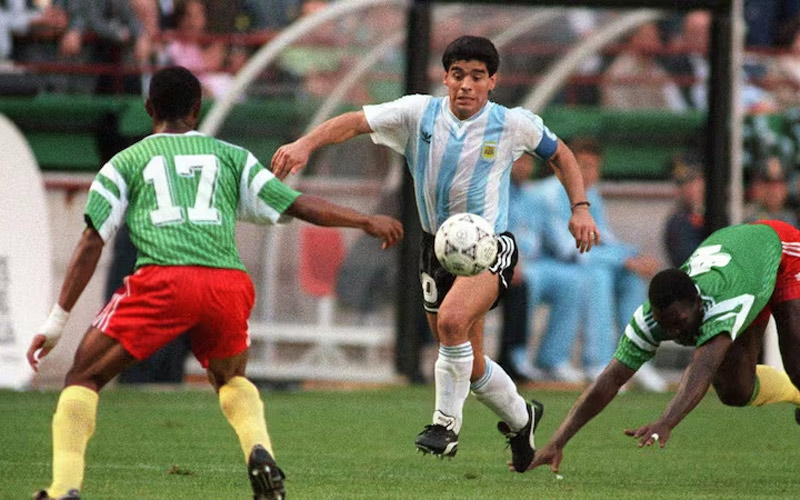
What made it more than a one-day sensation was what followed. The Indomitable Lions won the group and went all the way to the quarter-finals, where they led England 2–1 with eight minutes remaining before losing 3–2 to goals from Gary Lineker. Roger Milla, recalled from semi-retirement, became the tournament's most joyful figure. Argentina, for their part, recovered from the humiliation with remarkable composure — reaching the final before losing to West Germany.
Senegal 1–0 France (2002)
France arrived in Korea and Japan for the 2002 World Cup as reigning world and European champions, carrying the prestige of back-to-back major tournament victories and a squad stacked with players at the peak of their powers. Zinedine Zidane was injured and absent for the opening match, but few believed it mattered. Senegal were playing their first World Cup game in their history.
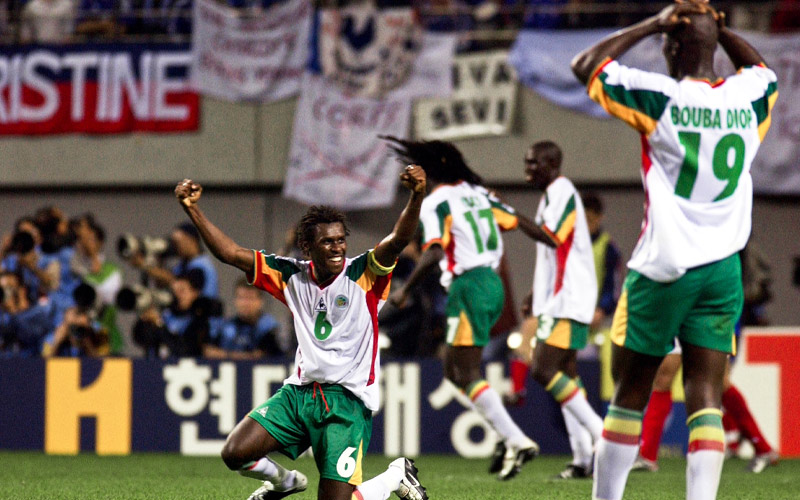
Papa Bouba Diop scored after half an hour, running toward the corner flag in a celebration so joyful it became one of football's most reproduced images, teammates sliding in around him, piling on, a continent watching. France created chances and found nothing. They drew with Uruguay, rushed a clearly unfit Zidane back for the third game against Denmark, lost again, and went home without scoring a single goal. Senegal reached the quarter-finals. The defending champions had been dismantled by the weight of their own assumption.
South Korea 2–1 Italy (2002)
The 2002 tournament produced upsets in clusters, but none with quite the drama of South Korea's round of 16 clash with Italy. The co-hosts had already exceeded expectations in the group stage, but facing an Italy side featuring Francesco Totti, Christian Vieri, and Alessandro Del Piero felt like a different kind of test. Vieri put Italy ahead. South Korea equalised. Into extra time.
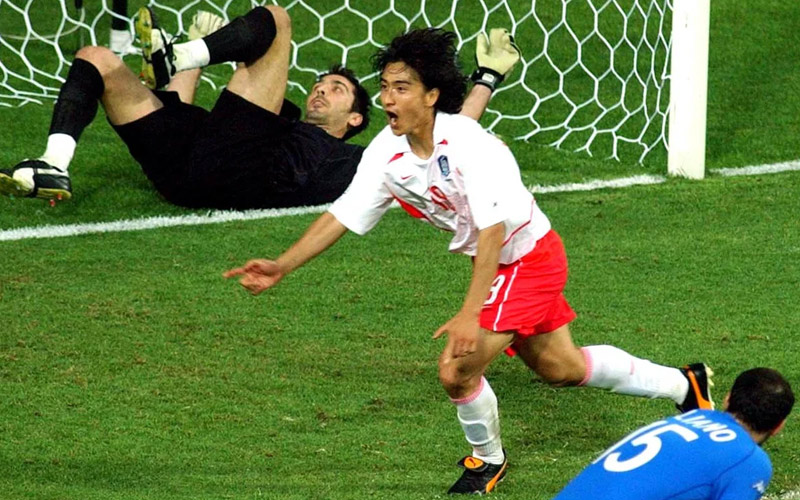
Ahn Jung-hwan headed the golden goal winner — having spent the season on loan at Perugia, whose president immediately announced he was terminating the contract. South Korea went on to beat Spain in the quarter-finals, lost to Germany in the semi-finals, and finished fourth — the greatest tournament run by any Asian nation in World Cup history, a record that still stands. The refereeing across those knockout matches remains disputed, but the collective courage and tactical organisation of Guus Hiddink's side was beyond question.
Saudi Arabia 2–1 Argentina (2022)
Argentina entered the 2022 World Cup on a 36-match unbeaten run, ranked third in the world, and led by Lionel Messi in what was understood to be his final shot at the one trophy that had evaded him. Messi scored from the penalty spot in the first half. Three further Argentine goals were disallowed for offside. Saudi Arabia, who had been penned deep, shifted their defensive line dramatically upward in the second half — a high-line trap so aggressive it seemed reckless — and it worked. Two goals in five minutes turned the game. Argentina could not find a way back.
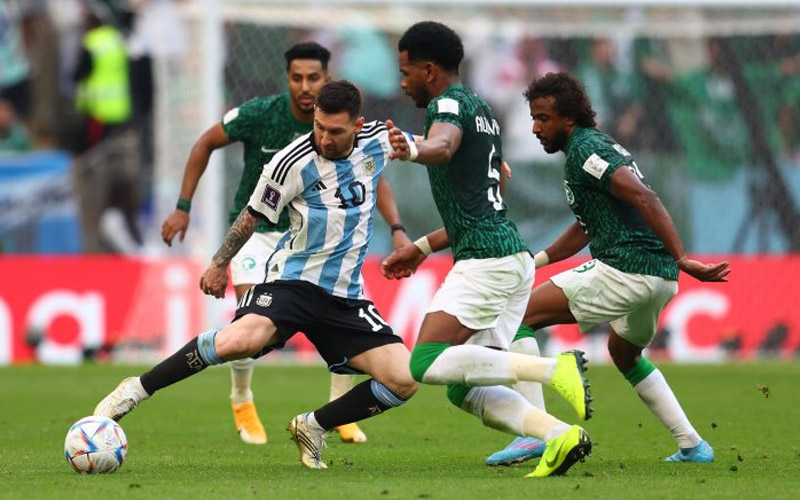 The result sent shockwaves through a tournament that was already showing its capacity for chaos. Saudi Arabia celebrated a national holiday the following day. Argentina, to their considerable credit, won every subsequent match and lifted the trophy in the final against France. But the image of Messi sitting on the pitch at the final whistle, staring at the ground as Saudi Arabia celebrated around him, will outlast the trophy lift in collective memory.
Japan 2–1 Germany (2022)
Germany led Japan 1–0 with fifteen minutes remaining in their 2022 group stage match and appeared in control. What followed was a comeback that, alongside Saudi Arabia's result earlier the same day, reframed the entire tournament in a single afternoon. Ritsu Doan equalised. Takuma Asano, running clear on goal with a tight angle and a goalkeeper closing him down, lifted the ball over Manuel Neuer with extraordinary precision. Japan won. The stadium erupted.
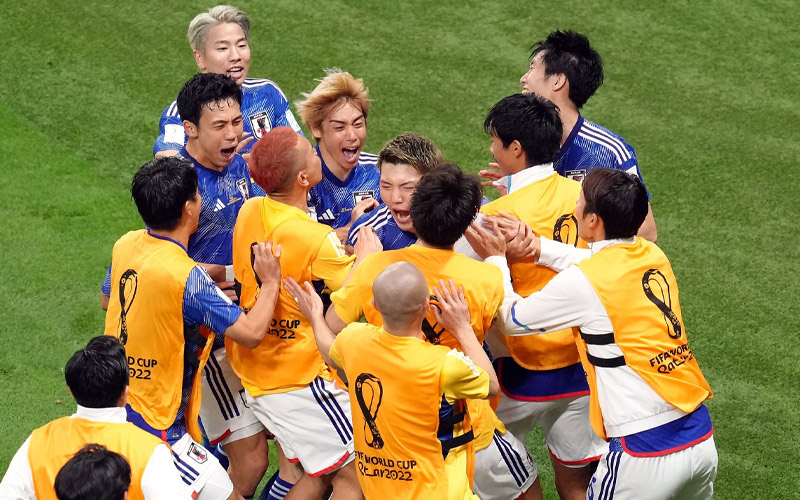
Germany were subsequently eliminated in the group stage for the second consecutive World Cup — a nation that had won four world titles failing to survive the first round in consecutive tournaments. For Japan, and for Asian football broadly, the 2022 tournament represented something genuinely new. Two of the continent's nations had beaten two of Europe's most decorated sides on the same day. The football world was paying attention in a way it had not before.
Morocco's run to the semi-finals (2022)
Most entries on this list are defined by a single result. Morocco's contribution to the 2022 World Cup cannot be reduced to one game. They beat Belgium in the group stage, eliminated Spain on penalties in the round of 16, and knocked out Portugal, Cristiano Ronaldo's Portugal — in the quarter-finals. Every match they played was against a side with vastly greater resources, deeper squads, and longer histories at the tournament. They won them all.
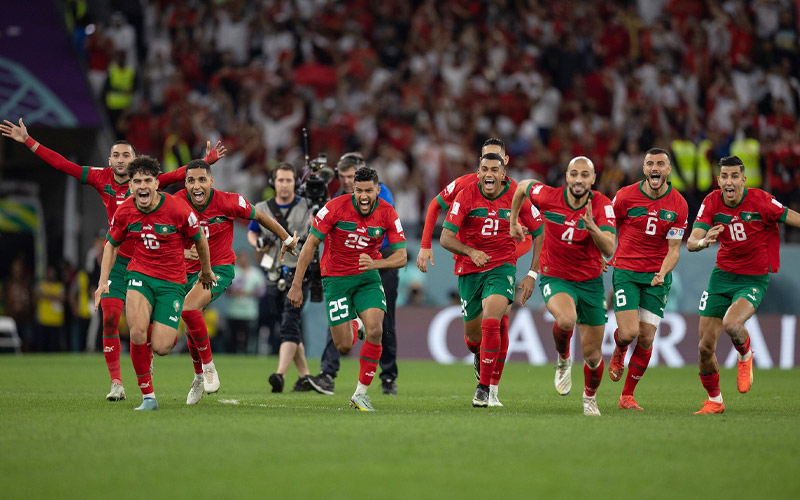
Walid Regragui's side were tactically meticulous a defensive structure so coordinated and aggressive in transition that opponents with far superior individual quality were consistently unable to exploit it. Morocco became the first African and first Arab nation to reach a World Cup semi-final. The players, many of whom held dual nationality and had consciously chosen to represent Morocco, celebrated with their families on the pitch after the Portugal match in scenes that carried an emotional weight beyond sport. They lost to France in the semi-finals. They had already made history that no subsequent result could diminish.
A pattern across the decades
The upsets on this list span seven decades and four continents, but they did not happen randomly. Across every era, every confederation, and every stage of the tournament, the same forces kept appearing — different teams, different stadiums, the same underlying logic.
What the great upsets have in common
Look across every result on this list and a pattern emerges that has nothing to do with luck. The teams that caused the great upsets arrived with a specific tactical idea designed to neutralise the one thing the favourite did best. Algeria suffocated West Germany's build-up. Morocco made every transition against Spain and Portugal brutally fast and brutally organised.
Saudi Arabia's high defensive line turned Argentina's attack against itself with a precision that required hours of preparation to execute. The underdogs did their homework. The favourites, almost without exception, did not do theirs.
The crowd factor runs through this list in ways that are easy to overlook. Several of these results unfolded in atmospheres that were never straightforwardly hostile to the underdog. Italy faced a Milanese crowd in 1990 with little love for a squad built around Neapolitan heroes. France's arrogance in 2002 alienated neutrals before the tournament had begun.
Brazil's near-mythological status in 1950 created a pressure so immense it paralysed them the moment Uruguay equalised. The stadium, in each case, was not the home advantage the favourite expected.
The generational thread is perhaps the most quietly significant of the three. Senegal's 2002 squad had grown up watching Cameroon's 1990 run and understood what was possible. Morocco's 2022 generation had absorbed decades of near-misses by African nations and arrived in Qatar with something to prove on behalf of a continent. Upsets do not happen in isolation.
They build on each other across editions, creating a collective belief that the hierarchy of world football is neither fixed nor fair and that the World Cup, uniquely, is the place where that can be proved. The full records of every nation involved are documented across our World Cup statistics pages.
The rule change that came from a shock result
Algeria's victory over West Germany in 1982 did not just produce one of the great upsets in tournament history. It exposed a structural flaw in the competition that FIFA could no longer ignore. Because the final group games were played on different days, West Germany and Austria knew exactly what result they needed when they met in Gijón. A 1–0 German win sent both teams through and eliminated Algeria, who had finished with an identical points tally.
The match was so transparently arranged both sides passing the ball without intent from the moment Germany scored that spectators in the stadium booed continuously and Algerian fans held up banknotes in the stands. Football had rarely looked so compromised at its own flagship event.
FIFA's response was direct. From the 1986 World Cup onwards, all final group-stage matches within each section have been played simultaneously, making collusion between two sides mathematically impossible. It is a rule so fundamental to the integrity of the modern tournament that most fans today take it entirely for granted — unaware that it exists because a group of Algerian players beat West Germany on a summer afternoon in northern Spain. Every underdog that has since survived a final group game on merit, including many of the nations on this list, has benefited from the protection that upset created.

Carlos Ramón
Football historian and editorial director of Historical Soccer. Specialist in World Cup history, classic tactics, and iconic matches.