Twins at the World Cup, from the Van de Kerkhofs to the Hassan brothers
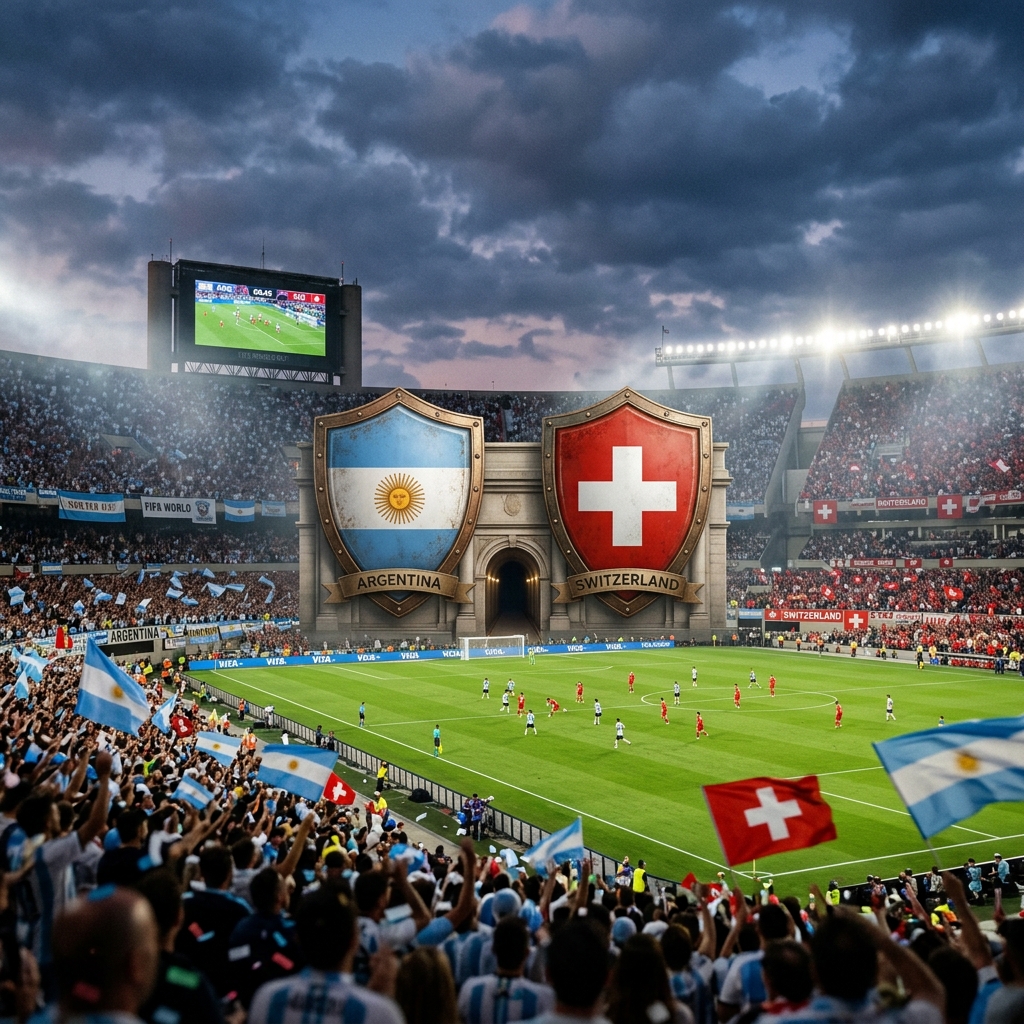
The Egyptian Football Association dismissed head coach Hossam Hassan on November 7, 2026, and parted ways with his twin brother Ibrahim at the same time. Four months earlier the pair had taken Egypt further than ever at a World Cup. The Pharaohs beat Australia on penalties to reach the Round of 16, then led Argentina 2-0 in Atlanta before losing 3-2 on July 7, 2026.
Their exit closes a story that began on the pitch. Hossam Hassan and his brother played every minute of Egypt's Italia 1990 campaign side by side, and that makes them members of one of football's smallest clubs.
The twins most searched for after this summer's tournament were two fans filmed in the stands at Portugal against Colombia. The twins who actually wore the shirt are far rarer, and their story runs back almost 70 years.
How many twins have played at the World Cup?
Nine pairs of twins have been named in the same men's World Cup squad, from Paraguay in 1958 to Russia in 2018. Only five of those pairs both took the field at the same tournament. The Netherlands lead the list with two pairs, and Italia 1990 remains the only edition with two sets of twins on the pitch.
| Twins | Nation | World Cup | Both played? |
|---|---|---|---|
| Eliseo and Eligio Insfrán | Paraguay | 1958 | Neither played |
| René and Willy van de Kerkhof | Netherlands | 1974, 1978 | Yes, in 1978 |
| Zlatko and Zoran Vujović | Yugoslavia | 1982 | Only Zlatko |
| Hossam and Ibrahim Hassan | Egypt | 1990 | Yes |
| Eissa and Ibrahim Meer | United Arab Emirates | 1990 | Yes |
| Frank and Ronald de Boer | Netherlands | 1994, 1998 | Yes, in both |
| Marcin and Michał Żewłakow | Poland | 2002 | Yes |
| Philipp and David Degen | Switzerland | 2006 | Only Philipp |
| Aleksei and Anton Miranchuk | Russia | 2018 | Only Aleksei |
The Insfrán entry is the only uncertain one. Our archive records both Paraguayans with the same birth date, October 27, 1935, but some reference sources give Eligio a different one, so their status as twins is not fully confirmed.
Counting only the matches in which both twins were on the pitch narrows the list even further.
| Twins | World Cup | Matches played together |
|---|---|---|
| Frank and Ronald de Boer | 1994, 1998 | 8 |
| René and Willy van de Kerkhof | 1978 | 7 |
| Hossam and Ibrahim Hassan | 1990 | 3 |
| Eissa and Ibrahim Meer | 1990 | 3 |
| Marcin and Michał Żewłakow | 2002 | 2 |
Italia 1990, the only tournament with two pairs of twins
Born on August 10, 1966, the Hassans were 23 when Egypt returned to the World Cup after 56 years away. Ibrahim played at right back and Hossam led the line, and each logged 270 minutes as Egypt drew 1-1 with the Netherlands in Palermo on June 12, 1990, held Ireland 0-0 and lost 1-0 to England.
Egypt went out, but the brothers went on to define the national team for a generation. Hossam finished with 69 goals, still the Egyptian record, and Ibrahim reached 131 caps.
In Group D, the United Arab Emirates were making their World Cup debut with a pair of their own. Eissa and Ibrahim Meer, born on July 16, 1967, played all three of their country's matches in defence. The Emirates lost 2-0 to Colombia, 5-1 to West Germany and 4-1 to Yugoslavia.
That last match had a twist. Leading Yugoslavia's attack against the Meer twins was Zlatko Vujović, whose own twin brother had spent the 1982 tournament on the bench.
The Dutch twins who reached the biggest stage
René and Willy van de Kerkhof, born on September 16, 1951, were part of two Dutch teams that reached the final. In 1974 their role was marginal. Willy did not play a minute, and René appeared only in the second half of the final against West Germany.
Argentina was different. Both twins played all seven Dutch matches at the 1978 tournament, and both scored. Willy struck in the 82nd minute of the 5-1 win over Austria on June 14, 1978, and René equalised in the 84th minute of the 2-2 draw with West Germany four days later.
No other twins have scored at a World Cup, and no other twins have played in a final. Even the build up to that final involved them. Argentina's captain Daniel Passarella objected to the cast René was wearing, and the dispute was only settled once the cast was padded.
Two decades later the Netherlands produced the most enduring twins in the competition's history. Frank de Boer and his brother Ronald, born on May 15, 1970, played together twice in 1994 and six more times in 1998, including the semi-final against Brazil.
Those eight matches together are a World Cup record for any pair of brothers, one more than the Van de Kerkhofs and Bobby and Jack Charlton. Brazil knocked the Netherlands out both times. By the time they finished, Frank had 112 caps and Ronald 67.
Twins who shared a squad but never a pitch
Poland's Marcin and Michał Żewłakow were the last twins to share a World Cup pitch, against South Korea and Portugal in 2002. Marcin also scored in the 3-1 win over the United States on June 14, 2002. No twins have played together at the tournament since.
For everyone else, the squad list was as close as it got. Zlatko Vujović started all three of Yugoslavia's matches in 1982, while his brother Zoran, a defender, never left the bench. Zlatko returned for Italia 1990 without him.
The Degens tell the same story. Philipp started all four Swiss matches at Germany 2006, 390 minutes in total, before the penalty shootout defeat to Ukraine. David, older by 30 minutes, did not play at all.
Russia's Miranchuk twins, born on October 17, 1995, were both named for their home World Cup in 2018. Aleksei made one start, against Uruguay, and was replaced after an hour. Anton never got on. Four years earlier, Vasili Berezutski had captained Russia in Brazil without his twin Aleksei in the squad.
Have twins ever played at the Women's World Cup?
We have found no case of twins in the same squad at a senior Women's World Cup. The closest are France's Delphine and Estelle Cascarino, born on February 5, 1997. Delphine played in 2019, when France reached the quarter-finals, but a torn cruciate ligament kept her out in 2023. Estelle went instead and played three of France's five matches.
Youth tournaments have come nearer. At the 2016 U-20 Women's World Cup, Sabrina and Mónica Flores played against each other, one for the United States and the other for Mexico. Two years later, South Africa's Shamase twins started together against Japan at the U-17 tournament, aged 16.
Brothers at the World Cup and where twins fit in
Brothers are far more common. The 2026 tournament had eight pairs, a record, beating the five pairs seen in 1958 and again in 1990. Brian Brobbey and Derrick Luckassen became only the fifth pair of brothers to both score at a World Cup, joining the Walters, the Van de Kerkhofs, Sócrates and Raí, and the Laudrups.
The Van de Kerkhofs are the only twins on that list. The Charltons and the Walters lifted the trophy, but no set of twins has ever won the World Cup.
The Timber twins and the next chance
Jurriën and Quinten Timber, born on June 17, 2001, should have become the third Dutch pair this summer. Both were named in Ronald Koeman's squad. Then Jurriën, who had played three matches at Qatar 2022, withdrew with a groin injury before the final warm up and was replaced by Lutsharel Geertruida.
Quinten went alone. He missed the Sweden match with a concussion and then missed his kick in the penalty shootout as the Netherlands fell to Morocco after a 1-1 draw in Monterrey on June 29, 2026. Both will still be in their twenties at the 2030 World Cup.
Twins at the World Cup remain a curiosity measured in single figures. Only five pairs have both played at the same tournament, and none since 2002. The Hassans carried the story onto the touchline as coach and director, and with their exit this month the Timbers are the likeliest pair to write the next line.
Explore more of the story through the full World Cup history of the Netherlands national team, the nation with more twins than any other, and every result from the 2026 World Cup.

Carlos Ramón
Football historian and editorial director of Historical Soccer. Specialist in World Cup history, classic tactics, and iconic matches.