Portugal vs Colombia World Cup 2026 Prediction and Preview
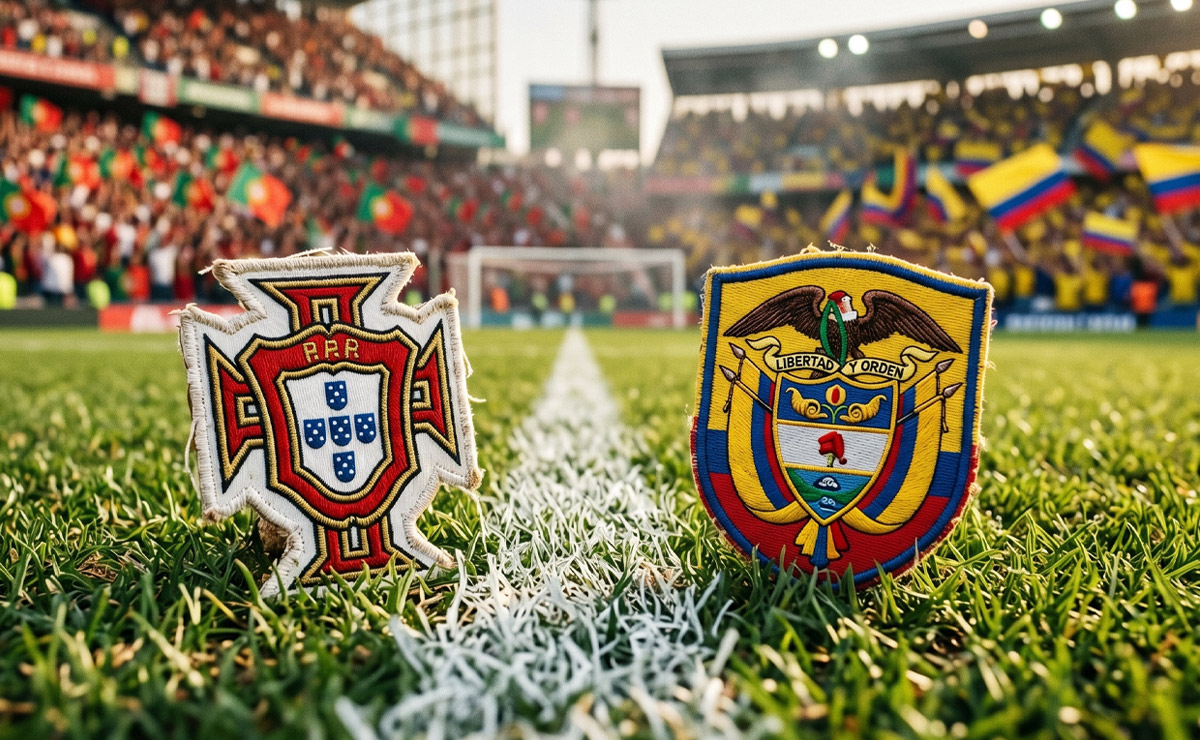
The most requested match of the entire 2026 FIFA World Cup is not a final, not a semi-final, and not a clash between two former champions. It is a group stage fixture between Portugal and Colombia in Miami on June 27, and the 500 million ticket requests that piled up during FIFA's application window tell you everything about the appetite for this game. Two nations with genuine World Cup ambitions, a group that gives them every reason to settle things between themselves, and a first ever competitive meeting between two sides that have spent decades building toward exactly this kind of stage.
Group K and the most wanted match of 2026
On June 27, 2026, Portugal and Colombia meet at Miami Stadium in what FIFA data has already confirmed as the single most requested fixture of the entire tournament. When the ticket application window closed in January, more than 500 million requests had been submitted globally, and this match topped them all. That alone tells you something about the weight this game carries before a ball has even been kicked.
Group K is, on paper, one of the more straightforward in the draw. Portugal enter as clear favourites, ranked 5th in the world, with Colombia close behind at 13th. Uzbekistan and DR Congo complete a group that most expect the two heavyweights to navigate without too much trouble. But the final matchday, when Portugal and Colombia face each other directly, could easily decide which of them lifts the group and which has the harder road through the knockout rounds.
| Nation | Confederation | FIFA Ranking | World Cup appearances |
|---|---|---|---|
| Portugal | UEFA | 5 | 8 |
| Colombia | CONMEBOL | 13 | 6 |
| DR Congo | CAF | 46 | 2 |
| Uzbekistan | AFC | 50 | 1 |
Portugal at the World Cup
For a nation that has produced two of the greatest players in the history of the game, Portugal's relationship with the World Cup is defined as much by absence and near misses as by genuine achievement. The 2026 tournament in North America represents a ninth appearance, and perhaps the last real chance for a generation that has carried enormous talent without ever finding the final step.
Portugal's World Cup history
Portugal's debut at the 1966 World Cup in England remains their finest hour. With Eusébio leading the attack, they reached the semi-finals, beat North Korea 5-3 in an astonishing comeback after going 3-0 down, and finished third after defeats to England and the USSR. Eusébio finished as the tournament's top scorer with nine goals. It was a performance so complete it would take forty years to come close to repeating it.
What followed was a long silence. Portugal missed seven consecutive World Cups from 1970 to 1982, returned briefly in 1986 without making it past the group stage, then went absent again until 2002. Five World Cups missed across two decades is the kind of gap that defines a generation of fans who never got to see their country on the biggest stage.
The modern run began in 2002 and has not stopped since. A group stage exit that year and another in 2014 bookend what are otherwise increasingly competitive campaigns. The 2006 tournament in Germany stands out — a fourth-place finish, unlucky to lose a semi-final against France. In 2022, they demolished Switzerland 6-1 in the round of 16 before falling to Morocco in the quarters. Eight tournaments, and the final has never been reached.
| Year | Stage reached | Goals scored |
|---|---|---|
| 1966 | Third place | 17 |
| 1986 | Group stage | 2 |
| 2002 | Group stage | 6 |
| 2006 | Fourth place | 7 |
| 2010 | Round of 16 | 8 |
| 2014 | Group stage | 4 |
| 2018 | Round of 16 | 7 |
| 2022 | Quarter-finals | 12 |
Key players to watch
Cristiano Ronaldo arrives at his fifth World Cup at 41 years old, carrying eight tournament goals and the weight of the one trophy that has always escaped him. His place in the squad has not been formally confirmed given a hamstring injury earlier this year, but there is no serious reason to believe he will be absent unless fitness forces the issue. The odds around him as Portugal's top scorer sit at approximately 20/1, which tells you the market still believes in him even at this stage.
Behind Ronaldo, the generation that must carry this team forward is real and talented. Bruno Fernandes has grown into the central creative figure under Roberto Martínez. Gonçalo Ramos announced himself to the world with a hat-trick against Switzerland in 2022 on his first ever World Cup start. Pedro Neto and Rafael Leão bring pace and unpredictability from wide. Portugal will arrive with four confirmed absentees through injury — Tomás Araújo, Gonçalo Inácio, Gonçalo Guedes and Vitinha — which thins the squad depth, particularly in defence and midfield.
How Portugal qualified and arrived
Martínez has been in charge since January 2023, and the numbers across 32 matches tell a broadly positive story — four defeats in total, with a style that emphasises possession and verticality. Qualification from UEFA Group F was completed with 13 points from 18, though a 2-0 home defeat to Ireland in November raised questions about defensive solidity that have not fully gone away. They head to North America having won the UEFA Nations League for a second time in 2025, which at least provides recent tournament experience and confidence.
The unhealed wound is Euro 2024. Portugal were eliminated in the quarter-finals by France on penalties after a match that produced nothing in 120 minutes of football. It was the second major tournament in a row ending at that stage, and the pattern has not gone unnoticed. The bookmakers price them at around 11/1 to win the World Cup outright, with the quarter-finals again considered their most likely point of exit. Breaking that ceiling is the entire point of 2026.
Colombia at the World Cup
Colombia arrive in North America with a point to prove. Missing the 2022 tournament after failing to qualify was a jolt the entire federation felt, and the hunger that has built since that absence runs through everything Néstor Lorenzo's side has done in the past three years. This is a team that does not simply want to be at the World Cup. It wants to leave a mark on it.
Colombia's World Cup history
Colombia's debut in 1962 produced one of the most remarkable moments in the tournament's early history. Trailing 4-1 against the Soviet Union, they came back to draw 4-4, with Marcos Coll scoring the only goal direct from a corner kick ever recorded at a World Cup. Lev Yashin was in goal. It remains a moment of genuine audacity from a team that went home bottom of the group, yet somehow left a legend behind.
The long gap between 1962 and 1990 gave way to what felt like a golden era arriving. Carlos Valderrama, René Higuita, Freddy Rincón — that generation had personality and quality in equal measure. They reached the round of 16 in 1990, qualified again in 1994 and 1998, but the weight of expectation and the darkness surrounding that 1994 campaign, which ended with the murder of Andrés Escobar, cast a long shadow over everything the squad achieved.
The real peak came in 2014. Under José Pékerman, and without the injured Radamel Falcao, Colombia won their group, beat Uruguay in the round of 16, and fell to hosts Brazil in the quarters. James Rodríguez won the Golden Boot with six goals and the Puskás Award for his strike against Uruguay. It remains the finest tournament any Colombian generation has produced. Missing 2022 after that benchmark made the absence sting all the harder.
| Year | Stage reached | Goals scored |
|---|---|---|
| 1962 | Group stage | 5 |
| 1990 | Round of 16 | 4 |
| 1994 | Group stage | 4 |
| 1998 | Group stage | 1 |
| 2014 | Quarter-finals | 12 |
| 2018 | Round of 16 | 6 |
Key players to watch
James Rodríguez is the name every Colombia fan searches for first, and the question around him is exactly what it has been for the past four years form and fitness. He is 34, and the gap between the player who lit up Brazil in 2014 and the one who has moved around clubs since is real. What is also real is that on his best days he still sees the game at a different speed to almost anyone else, and Lorenzo has kept faith with him throughout this cycle. If James is sharp, Colombia are a different team.
The generation around him has grown considerably. Luis Díaz has become one of the most dangerous wide forwards in European football. Jhon Durán offers a different profile through the middle physical, direct, and capable of moments that change games. The absences of Juan Quintero and Juan Cabal through injury are significant, particularly Quintero in midfield, where his ability to unlock tight defences had become a central part of Colombia's creative approach under Lorenzo.
How Colombia qualified and arrived
Lorenzo took charge in June 2022 and built something steady and coherent over three years. Colombia qualified directly from CONMEBOL with a campaign that included a famous 5-0 win over Argentina in Buenos Aires during the qualification cycle that preceded this one a result that announced this generation to the continent. They finished the recent qualifying round in a position that reflected genuine strength, not fortune.
The Copa América 2024 final is the moment this squad will carry with them into the tournament. They reached the decider, lost to Argentina in extra time, and left believing they had been the better team across much of the competition. That near miss has been fuel, not a wound. At 13th in the world in the current FIFA rankings, Colombia are not arriving as underdogs. They are arriving as a team that believes its time has genuinely come.
Lorenzo has won more than he has lost across his tenure, and his squad carries a confidence that the 1990s generation never quite had the stability to maintain. Whether James, Díaz, and Durán can deliver on a stage this big is the real question. The group stage should not be the problem. What happens after it very much depends on which Colombia shows up.
Portugal vs Colombia head to head
These two nations have met only twice in their entire international history, and both occasions were friendlies with no competitive stakes attached. The first came in 1994, when Colombia ran out 2-0 winners in a pre-tournament warmup ahead of that summer's World Cup in the United States. The second, twenty years later, produced a 2-2 draw in a friendly played in 2014. Two matches, one win apiece in terms of outcome narrative, and absolutely no precedent that can meaningfully predict what happens in Miami. That absence of history is itself a kind of storyline. On June 27, 2026, they play each other for the first time in twelve years, and for the first time in a competitive match, ever.
| Date | Competition | Result |
|---|---|---|
| 1994 | International friendly | Colombia 2-0 Portugal |
| 2014 | International friendly | Colombia 2-2 Portugal |
What this record tells us is almost nothing about who has the upper hand, because friendly matches played with rotated squads and no pressure rarely carry predictive weight. What it does confirm is that Colombia has never lost to Portugal, for whatever that is worth across a sample of two games separated by two decades. The June 27 fixture will be the first time a competitive result between these nations exists in the record books, and whichever side wins it will be shaping a rivalry from scratch.
Portugal vs Colombia prediction
On paper, this is the decisive match of Group K: the one that will almost certainly decide who finishes first and who has a harder path into the knockout rounds. Both teams know it. The group context gives this game a weight that goes beyond three points, and both managers will be preparing for it from the moment the tournament begins.
What the odds say
Portugal are favourites to win the match, as they are favourites to win the group. BetMGM prices them at -250 to lift Group K, implying a 71.4% probability, with Colombia at +250. For the tournament overall, Portugal sit at around 11/1 to go all the way, while Colombia are a considerably longer shot at 40/1. The bookmakers see a clear gap in overall tournament pedigree, even if the gap in quality on the pitch is narrower than those numbers suggest.
What the match odds also reflect is that a draw is a genuinely plausible result. This is not a fixture between a heavyweight and a minnow. Colombia are a ranked 13th in the world, have reached a Copa América final within the past two years, and carry threats that no defence in this tournament can afford to take lightly. The market is pricing caution from both sides, particularly given how much both teams have to lose by going all-out for a win and leaving space at the back.
What Polymarket and the markets say
Polymarket's Group K winner market assigns Portugal a 67% probability of finishing top, with Colombia at 30%. That gap reflects Portugal's structural advantages UEFA pedigree, tournament experience, and a squad that has been tested at this level far more consistently but the 30% assigned to Colombia is not a courtesy. It is a genuine assessment from traders putting real money behind their views.
For the match itself, Polymarket's own AI summary of the specific Colombia vs Portugal market describes the probabilities as sitting close to 50%, with the stylistic matchup and Colombia's high press keeping the outcome genuinely open. The Colombia vs Portugal fixture has attracted more trading volume and ticket demand than any other match in the tournament, which says something about how neutral observers are reading this game. The market is not treating it as a foregone conclusion.
Our prediction
Portugal have the stronger squad on paper, the more reliable qualifying record, and a coach who has built something coherent over three years. They should finish first in this group. But the Colombia match, played on matchday three with group standings already partially determined, is the one fixture where the pressure distribution could shift. If Colombia arrive in Miami having already won their first two games and Portugal have dropped points, the entire dynamic of who needs what changes. Context within the group stages matters as much as raw quality.
Colombia's best version, high tempo, quick transitions, Díaz and Durán stretching defences in behind is a genuine problem for a Portugal side whose defensive record under Martínez has been one of the persistent doubts of this cycle. The 2-0 defeat to Ireland during qualifying was not an outlier. There is real vulnerability there, and Colombia are precisely the type of team built to find it. The key absentees on both sides Vitinha and Gonçalo Inácio for Portugal, Quintero and Cabal for Colombia — affect the balance of both midfields in ways that are hard to fully model before the tournament begins.
Our prediction is a narrow Portugal win, 2-1, in a game that produces goals and is decided late. Portugal's individual quality in the final third, even with injury absentees, is the difference. But the result feels far from certain, and anyone watching expecting a routine European victory over a South American side should probably adjust their expectations before kickoff.
Explore more
Portugal and Colombia have spent decades building histories worth studying, through World Cups that defined generations, players who carried nations on their backs, and tournaments that ended in heartbreak just short of the finish line. The June 27 fixture in Miami is the first time those histories collide in a match that actually counts, and it is one of the most anticipated group-stage games the tournament has produced in years. Whatever happens, it adds a first competitive chapter to a rivalry that has, until now, existed only in two forgotten friendlies.
For a deeper look at everything that has brought these two nations to this point, explore the full Portugal and Colombia team profiles on Historical Soccer, follow the complete 2026 World Cup coverage as the tournament unfolds, and revisit the campaigns that defined each generation, Colombia in 2014, when James Rodríguez announced himself to the world, and Portugal in 1966, when Eusébio carried a nation to third place and wrote a legacy that has never quite been matched since.

Carlos Ramón
Football historian and editorial director of Historical Soccer. Specialist in World Cup history, classic tactics, and iconic matches.