Egypt vs New Zealand World Cup 2026 prediction and preview
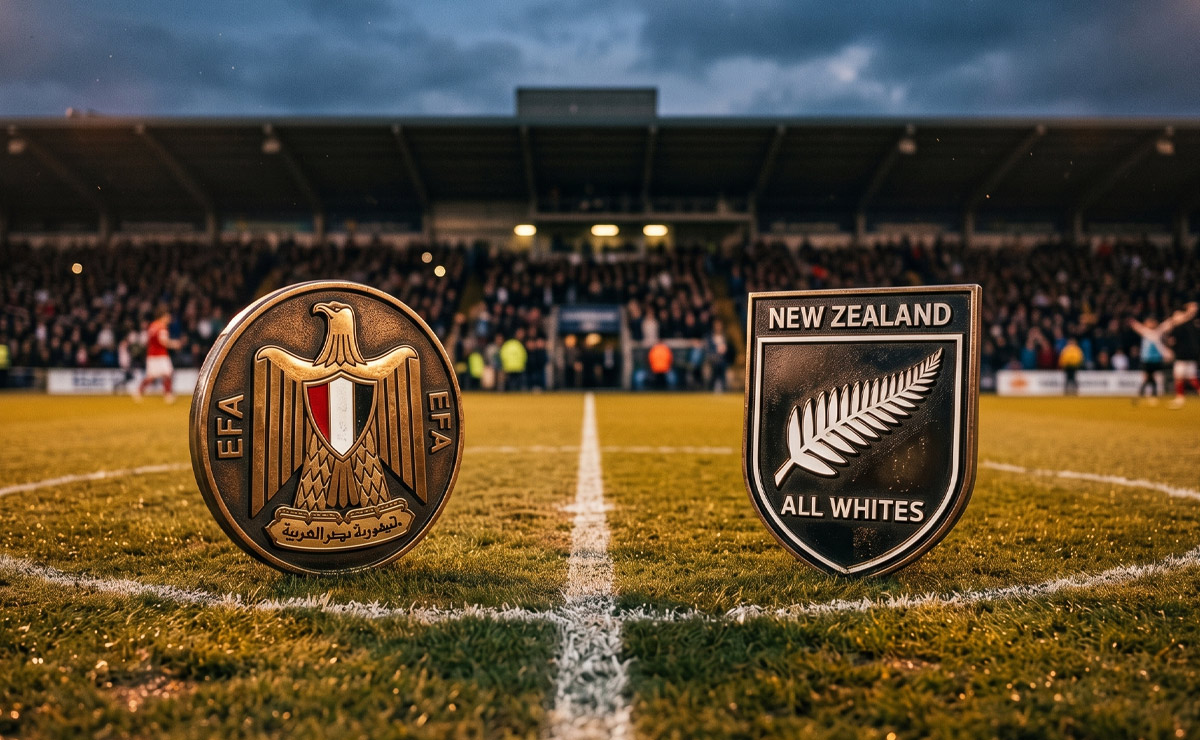
On June 22, 2026, BC Place in Vancouver hosts one of Group G's most intriguing fixtures, as Egypt bring their history, their star power, and their World Cup ambitions to face a New Zealand side that has spent years waiting for exactly this kind of stage. One team arrives as clear favourites with generational talent in their ranks. The other arrives with nothing to lose and everything to prove.
Group G clash at BC Place
On June 22, 2026, Egypt and New Zealand meet in Vancouver at BC Place for their second round fixture in Group G, one of the more open pools in the tournament. Belgium and Iran complete the group, making this a contest where the margins are fine and a single result can reshape everything.
For both sides, Round 2 arrives as the match that defines the campaign. Egypt will enter knowing that a win moves them into genuine contention for the knockout stage. New Zealand face the same calculation from the opposite direction — a defeat here, against one of Africa's most experienced sides, would leave them with almost no room for error.
| Match | Date | Venue |
|---|---|---|
| New Zealand vs Iran | June 18, 2026 | BC Place, Vancouver |
| Egypt vs Belgium | June 19, 2026 | TBC |
| New Zealand vs Egypt | June 22, 2026 | BC Place, Vancouver |
| Iran vs Belgium | June 22, 2026 | TBC |
| New Zealand vs Belgium | June 26, 2026 | TBC |
| Egypt vs Iran | June 26, 2026 | TBC |
Egypt at the World Cup
Few African nations carry as much World Cup history as Egypt. The Pharaohs were there at the very beginning, and across nine decades of the tournament, they have built a story that mixes genuine pioneering achievement with long, frustrating absences. In 2026, they return to the biggest stage with a squad that may be the most talented they have ever assembled.
A long history in the tournament
Egypt's first World Cup appearance came in 1934, making them the first African nation ever to compete in the tournament. That debut in Italy ended in a 4-2 defeat to Hungary, but the significance of simply being there was enormous. It would be 56 years before they returned.
When they did come back, in 1990, Egypt showed they belonged. They held the Netherlands to a goalless draw and finished the group stage unbeaten, a performance that announced African football to a generation of fans who had never seen the Pharaohs play. The 1994 campaign brought another group stage exit, and then came another long wait — 24 years — before Russia 2018 gave Mohamed Salah the global stage he deserved.
In 2026, Egypt arrive not as passengers but as a side that reached the AFCON semi-finals and qualified with authority through CAF. The absences that defined so much of their history feel like they belong to a different era now.
| Year | Stage reached | Notes |
|---|---|---|
| 1934 | Round of 16 | First African nation to play at a World Cup |
| 1990 | Group stage | Unbeaten, including draw vs Netherlands |
| 1994 | Group stage | Eliminated without a win |
| 2018 | Group stage | Salah's first World Cup |
| 2026 | TBC | Returning after eight years |
The players who can decide it
Salah remains the axis around which everything turns. Now in the later years of a career that has redefined what an Egyptian footballer can achieve, he enters this tournament having proved at Liverpool that his powers have not diminished. Every opposition defence at this World Cup will build their plan around stopping him first.
Omar Marmoush gives Egypt something they have rarely had alongside Salah — a second forward of genuine world-class quality. His breakout season at Manchester City placed him among the most dangerous attackers in Europe, and his movement and finishing give the Pharaohs a double threat that few sides at this tournament can match. Behind them, Ahmed Hegazi brings experience and aerial authority to a defensive structure that will need to be solid if Egypt are to go deep.
The one concern is Mahmoud Trezeguet, whose fitness has been a recurring issue in the build-up. When available, he adds creativity and directness on the flank that Egypt struggle to replicate with alternatives. His status will be one of the most-watched team news stories of the opening rounds.
| Player | Club | Role |
|---|---|---|
| Mohamed Salah | Liverpool | Captain, attacking talisman |
| Omar Marmoush | Manchester City | Second striker, creative force |
| Ahmed Hegazi | Al-Ittihad | Defensive anchor |
| Mahmoud Trezeguet | TBC | Wide attacker, fitness doubt |
How Egypt got to 2026
Egypt navigated CAF qualification with the kind of composure that strong favourites are expected to show but do not always deliver. Their campaign was defined by defensive solidity and Salah's ability to produce in the moments that mattered, and they arrived at the tournament without the qualifying drama that has derailed Egyptian sides in the past.
The AFCON 2025 run told a more complicated story. They reached the semi-finals before a narrow 3-2 defeat to Senegal ended their continental ambitions, and they lost the third-place match to Nigeria on penalties. In their last ten games across all competitions, Egypt recorded five wins, two draws, and three losses — a record that speaks to a team capable of beating anyone on their day but not yet consistently dominant.
Heading into the group stage, the strengths are clear: attacking quality at the top end that belongs among the best at the tournament, and a defensive structure that is hard to break down. The concern is consistency. Egypt have shown they can perform against elite opposition, but they have also shown they can be caught when the intensity drops. Against New Zealand, that should not be an issue. Against Belgium, it will define their tournament.
New Zealand at the World Cup
New Zealand are not a nation that appears in World Cup conversations often, and that is precisely what makes their story worth telling. Three appearances across more than four decades of trying, a confederation that offers a different kind of path to the finals, and a 2010 campaign that remains one of the most quietly remarkable in tournament history. The All Whites arrive in 2026 with everything still to prove and, for once, a squad capable of proving it.
The All Whites and their place in the game
New Zealand's first World Cup came in 1982, when they qualified through the OFC and faced a group containing Scotland, Brazil, and the Soviet Union. They lost all three matches and scored two goals, but the experience of being there planted something. It would be 28 years before they returned.
That return, in 2010, became the defining chapter of New Zealand football. Drawn into a group with Italy, Paraguay, and Slovakia, the All Whites did something no one predicted they finished unbeaten. A draw against Slovakia, a draw against Italy, and a draw against Paraguay. Three points, no wins, no defeats, and an exit on goal difference. No other nation in that tournament went unbeaten and failed to advance, and no New Zealand side has come close to matching it since.
In 2026, they make their third appearance, again via the OFC route, again as heavy underdogs in their group. The difference this time is that the squad around Chris Wood has more depth than any previous generation, and the group stage, for once, does not look entirely unwinnable.
| Year | Stage reached | Key result |
|---|---|---|
| 1982 | Group stage | Three defeats, eliminated |
| 2010 | Group stage | Unbeaten, three draws including vs Italy |
| 2026 | TBC | Third appearance |
Players to watch for New Zealand
Wood is the story, as he has been for the better part of a decade. New Zealand's all-time leading scorer with 45 goals in 88 appearances, the Nottingham Forest striker is the one player in this squad who operates at a level the opposition cannot afford to ignore. A knee injury has clouded his preparation, and his fitness will determine how dangerous the All Whites can be in the final third.
Around him, a generation of players has emerged that gives New Zealand more options than they have historically enjoyed. Marko Stamenic brings technical quality and composure in midfield, Matthew Garbett offers energy and pressing intensity that suits the way Darren Bazeley wants his side to play, and Ben Waine provides an alternative attacking threat if Wood cannot start. None of them carry Wood's weight alone, but together they give New Zealand something closer to a functioning system rather than a team built around one name.
Bazeley's tactical approach leans on defensive organisation and quick transitions, a pragmatic setup that served them well through qualifying and that makes sense for a side whose margin for error against stronger opposition is always thin. Whether that approach can produce a result against Egypt, a team with significantly more individual quality, is the central question of the match.
| Player | Club | Role |
|---|---|---|
| Chris Wood | Nottingham Forest | All-time top scorer, fitness doubt |
| Marko Stamenic | FC Copenhagen | Midfield organiser |
| Matthew Garbett | Torpedo Moscow | Press and transition |
| Ben Waine | Vitesse | Attacking alternative |
How New Zealand got to 2026
The OFC qualifying campaign was, by any measure, dominant. New Zealand did not so much qualify as steamroll their way through, posting results that belong in a different category from what most World Cup qualifiers look like. A 7-0 win against Fiji, an 8-0 win against Samoa, an 8-1 win against Vanuatu. Five qualifying matches played, five won, with a goal difference that tells you everything about the standard of opposition they faced.
That is the context that makes their overall recent form harder to read. Outside of qualifying, New Zealand's last ten matches produced three wins, one draw, and six defeats a record that sits in uncomfortable contrast with the qualifying numbers. The wins came against sides from the OFC and in friendlies against limited opposition. The losses came against teams closer to the level they will face in Group G.
The contradiction is real and it matters. New Zealand are a team that can look unstoppable against the opposition their confederation offers them and genuinely vulnerable against anyone operating at the level of Egypt, Belgium, or Iran. The 2010 generation managed to mask that gap through defensive discipline and collective effort. Whether this group can do the same is the question that will define their tournament.
Egypt vs New Zealand head to head
These two nations have shared a pitch just once in their entire footballing histories. On March 22, 2024, Egypt hosted New Zealand in Cairo in a friendly that ended 1-0 to the Pharaohs, the only goal coming from a Mostafa Mohamed penalty in the 29th minute. One match, one result, and a scoreline that told only part of the story.
| Date | Competition | Venue | Result |
|---|---|---|---|
| March 22, 2024 | International friendly | New Administrative Capital Stadium, Cairo | Egypt 1-0 New Zealand |
That game in Cairo revealed the gap that exists between these two sides in their current forms. Egypt controlled possession, created the cleaner chances, and won without ever needing to move out of second gear. New Zealand struggled to build any sustained pressure and managed little in front of goal, a problem that has followed them through much of their recent form. The penalty was the difference on the scoresheet, but the performance suggested Egypt were the stronger side by a margin that the scoreline did not fully capture.
When two nations meet at a World Cup for the first time after a single previous encounter, history tends to favour the side with the deeper tournament pedigree. Egypt have four World Cup campaigns behind them. New Zealand have two, and only one of those — 2010 — produced results that flattered them beyond what their squad deserved. The Pharaohs bring more experience of performing under pressure at this level, and that counts for something when the stakes rise from a March friendly to a Group G fixture with knockout implications.
What the head-to-head record cannot tell us is how much both squads have evolved since Cairo. Egypt have since navigated AFCON 2025, sharpening their collective understanding under their current manager. New Zealand have added depth in attacking areas and arrived in 2026 with a squad that, on paper, represents their strongest ever. The sample size is too small to draw firm conclusions, but every data point we have points in the same direction.
Egypt vs New Zealand prediction
Predicting a World Cup match between sides this far apart in the rankings is less about finding a surprise and more about reading how the stronger team wins. Egypt are clear favourites, the markets agree, and the football logic supports it. The more interesting questions are about the margin and the manner.
What the odds and markets say
The bookmakers have priced this as one of the more one-sided fixtures in Group G. Egypt sit at around 1.50 to win, the draw at approximately 3.50, and New Zealand at 6.00 or higher depending on the operator. Those odds reflect a market that sees this as a probable Egypt win without treating it as a foregone conclusion.
The prediction markets tell a sharper story. Kalshi and Polymarket place Egypt's win probability at around 80%, with the draw accounting for roughly 15% and a New Zealand win sitting at just 5%. That consensus across both traditional bookmakers and prediction markets is significant it is not one model or one operator reaching that conclusion, but the collective weight of money and data pointing in the same direction.
| Outcome | Approximate odds | Market probability |
|---|---|---|
| Egypt win | 1.50 | 80% |
| Draw | 3.50 | 15% |
| New Zealand win | 6.00+ | 5% |
Our match analysis
Egypt's technical quality in the final third is the defining factor here. Salah, Marmoush, and a fit Trezeguet represent an attacking line that New Zealand's defence has no realistic answer for at full intensity. The All Whites are organised and disciplined, but they have spent the better part of two years conceding goals against sides well below Egypt's level. Containing the Pharaohs for 90 minutes would require a defensive performance that nothing in their recent record suggests they are capable of producing.
The one area where New Zealand can find hope is in the goal count. Neither side has been prolific in recent competitive matches, and Egypt's wins have often been tight and controlled rather than emphatic. A low-scoring game suits the All Whites far more than an open one, and if they can stay compact and frustrate Egypt in the opening half hour, the match becomes more complicated. Our reading is Egypt to win, under 2.5 goals, with the decisive moment coming from the individual quality that New Zealand simply cannot match. Explore the full 2026 World Cup group stage as it unfolds.
Explore more
Egypt and New Zealand represent two very different footballing worlds, and their meeting in Vancouver is one of the more intriguing mismatches of the group stage. If this preview has sharpened your interest in either side, you can explore Egypt's full World Cup history and New Zealand's record in the tournament in our database, where every appearance, every result, and every squad is documented across all editions.
For the full picture of how Group G takes shape across all four teams, and to follow every result as the 2026 World Cup unfolds, the Historical Soccer World Cup section has everything you need — from the opening fixtures through to the final in New York.

Carlos Ramón
Football historian and editorial director of Historical Soccer. Specialist in World Cup history, classic tactics, and iconic matches.