Which countries have never won a World Cup but always qualify
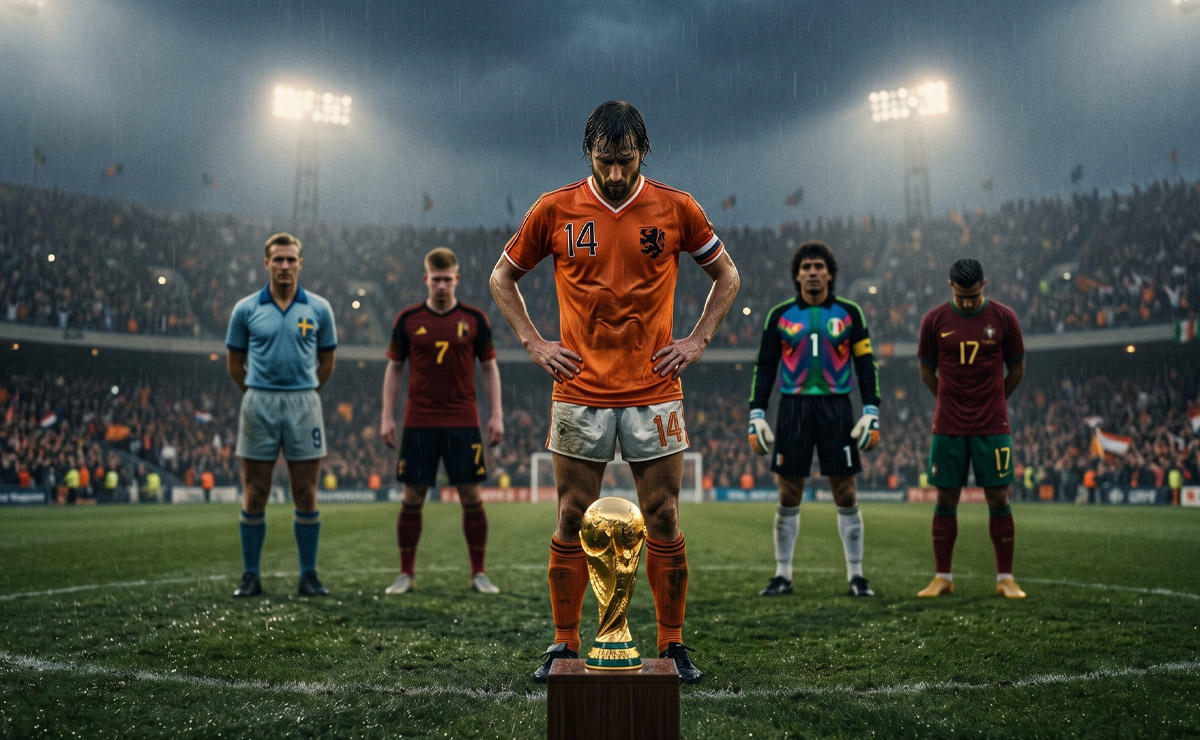
Some nations win the World Cup. Others simply show up, tournament after tournament, decade after decade, as reliable as the draw itself. These are the teams that qualify with such consistency that their absence would feel like a disruption to the natural order of football yet the trophy has never found its way into their hands. The Netherlands have lost three finals. Mexico have appeared 17 times without ever reaching the last four. Belgium assembled one of the greatest squads in modern history and came home with a third-place finish. The pattern repeats across confederations and across generations.
Understanding which countries have never won a World Cup but always qualify means looking beyond the final standings and into the deeper story of what the tournament actually demands. Qualifying rewards consistency, squad depth, and resilience across a long campaign. Winning rewards something rarer six perfect performances in four weeks, at the exact moment a golden generation peaks. For every Brazil and Germany that has managed to combine both, there are a dozen nations that have mastered one and fallen short of the other. This is their story.
The countries that always show up but never lift the trophy
No country in World Cup history has ever won the tournament on its first appearance. Earning that trophy demands something rarer than talent alone — it demands the kind of deep, repeating presence that only a handful of nations have ever built. Some teams have done exactly that, showing up at tournament after tournament across decades, yet somehow the title has always found another destination. These are the countries that have never won a World Cup but always qualify: nations whose names belong on every team sheet, every draw ceremony, every group-stage preview, yet whose trophy cabinet remains empty.
Netherlands
Few nations have left a deeper mark on the World Cup without ever winning it than the Netherlands. The Dutch reached three finals — in 1974, 1978, and 2010 — and lost each one. The Total Football philosophy that Johan Cruyff and Rinus Michels unleashed on the world in the 1970s was so revolutionary it changed how the game was played globally, yet West Germany and Argentina found ways to beat it when it mattered most.
What makes the Dutch case even more fascinating is that they are not a perfectly consistent qualifier. They missed the 1982 and 1986 tournaments entirely, and again in 2002, each absence arriving as a genuine shock given the talent available. That inconsistency makes their three finals all the more remarkable — and their failure to win any of them all the more difficult to explain.
Mexico
Mexico have appeared at 17 World Cups and will co-host the 2026 edition alongside the United States and Canada, making them one of the most enduring presences in the tournament's history. Within CONCACAF, they are the dominant qualifying force — when they have failed to reach the finals, as they did in 1990 due to a youth age-fraud suspension, it felt like a rupture in the natural order of things.
Yet for all that presence, the deepest wound in Mexican football is the one supporters call the Quinto Partido: the fifth game that never comes. From 1994 through to 2018, Mexico reached the round of 16 at seven consecutive World Cups and lost every single time. Their quarter-final appearances in 1970 and 1986 remain the ceiling, and both came on home soil.
Sweden
Sweden have been appearing at World Cups since the very beginning, and their record across different eras is one of quiet, persistent excellence. They finished third in 1950 and again in 1994, and reached the final on home soil in 1958, where only a 17-year-old Pelé stood between them and the title.
The Zlatan Ibrahimovic era brought renewed expectations. Sweden qualified reliably through those years and reached the quarter-finals in 2018, but the trophy conversation never truly materialized. They remain one of Europe's most dependable qualifiers across generations, even if the summit has always proved just out of reach.
Portugal
Portugal's World Cup story is one of brilliant individuals in teams that never quite found the perfect moment. Eusebio carried them to third place in 1966, the nation's greatest finish, in a campaign that announced Portuguese football to the world. Then came decades of inconsistency before the modern era brought them back as a fixture at every tournament.
The Cristiano Ronaldo question hangs over everything. The greatest goalscorer in the sport's history has played at four World Cups and never lifted the trophy — a fact that defines not just his legacy but Portugal's place in this particular conversation. A fourth-place finish in 2006 and a quarter-final in 2022 are the modern peaks, and neither felt like enough.
South Korea
No Asian nation has qualified for more consecutive World Cups than South Korea, who have appeared at every edition since 1986 — eight tournaments in a row. Their consistency is extraordinary by any measure, particularly given the depth of competition within the AFC and the limited number of qualifying spots available to Asian sides.
Their peak came in 2002, when co-hosting gave them home advantage and Guus Hiddink gave them a tactical identity sharp enough to beat Portugal, Italy, and Spain on the way to the semi-finals. That fourth-place finish remains the highest any Asian team has ever reached. The Son Heung-min generation has kept the qualifying run alive, but the round of 16 has been the ceiling in every modern edition.
Belgium
Belgium qualified for 14 of the 16 World Cups held between 1954 and 2022, missing only the 1990 and 1994 editions. That is a record of sustained qualification that very few European nations can match across such a long timeframe. For much of that period they were a solid presence without being a genuine title threat.
Then came the golden generation. Between 2014 and 2022, Belgium assembled one of the most talented squads in the world — Kevin De Bruyne, Eden Hazard, Romelu Lukaku, Thibaut Courtois — and their best result was third place at 2018, a semi-final loss to France. The window opened, it shone brightly, and it closed without a title. That, perhaps more than anything, is the story of Belgium at the World Cup.
| Nation | World Cup appearances | Finals reached | Best result |
|---|---|---|---|
| Netherlands | 11 | 3 (1974, 1978, 2010) | Runners-up |
| Mexico | 17 | 0 | Quarter-finals (1970, 1986) |
| Sweden | 12 | 1 (1958) | Runners-up |
| Portugal | 9 | 0 | Third place (1966) |
| South Korea | 11 | 0 | Fourth place (2002) |
| Belgium | 14 | 0 | Third place (2018) |
How close have these nations actually come to winning the World Cup
Reaching the World Cup consistently is one thing. Reaching it and genuinely threatening to win it is another conversation entirely. For the nations in this group, the pain is not simply that the trophy has never arrived — it is that several of them have stood within touching distance of it, sometimes more than once, and still come away empty. Sustained qualification builds expectation, and expectation, as any football historian will tell you, has a weight of its own when the knockout rounds begin.
Finals reached and lost
The Netherlands are the defining case. In 1974, Johan Cruyff's Total Football side were widely considered the best team in the world, yet they lost the final to a West Germany side playing on home soil. Four years later in 1978, a Dutch team without Cruyff reached the final again, this time losing to Argentina after extra time in Buenos Aires in circumstances that remain disputed to this day. Two finals, two defeats, and a philosophy that had transformed the game without ever receiving its ultimate reward.
Sweden's only final came in 1958, on home soil in Stockholm. They were a formidable side — experienced, well-organised, and playing in front of their own supporters. Then a 17-year-old named Pelé scored twice, and Brazil won 5-2. Hungary's appearances in the 1938 and 1954 finals are worth noting here too: the Mighty Magyars were perhaps the greatest side never to win the tournament, losing in Bern in 1954 despite being overwhelming favourites and having gone unbeaten for years.
The third Dutch final, in 2010, ended in a 1-0 defeat to Spain after extra time — Andrés Iniesta's goal in the 116th minute writing yet another chapter in a story that seems almost designed for heartbreak. Three finals across four decades, and not a single winner's medal to show for it. It is a record that no other nation in this conversation can match for sheer accumulated pain.
| Nation | Final(s) reached | Opponent | Result |
|---|---|---|---|
| Netherlands | 1974 | West Germany | Lost 1-2 |
| Netherlands | 1978 | Argentina | Lost 1-3 (AET) |
| Netherlands | 2010 | Spain | Lost 0-1 (AET) |
| Sweden | 1958 | Brazil | Lost 2-5 |
| Hungary | 1938 | Italy | Lost 2-4 |
| Hungary | 1954 | West Germany | Lost 2-3 |
Semi-final heartbreaks
For the nations that never reached a final, the semi-final has often been the cruellest stage. Belgium's exit in 2018 against France felt like the moment a golden generation ran out of road. They had beaten Brazil in the quarter-finals — a result that convinced an entire country that this was finally their time — and then a Samuel Umtiti header ended it. The margin was one goal. The occasion demanded more than they could give.
Portugal lost their 2006 semi-final to France by the same scoreline, a Zidane penalty the only difference between a nation's finest modern moment and another quarter-final exit. South Korea's semi-final defeat to Germany in 2002 was perhaps the most remarkable of all: no Asian side had ever reached that stage, and a 1-0 loss to a side of Germany's pedigree was no disgrace. Sweden's 1994 run ended against Brazil, 1-0, a Romário-inspired side simply too clinical to be stopped.
What these exits share is a pattern worth examining. Each of these nations reached the semi-final with momentum, with genuine quality, and with a case for going further. None converted that case into a final appearance. Whether that reflects tactical limitations, the weight of expectation, or simple tournament fortune is a question football fans have been debating ever since. The semi-final records across all World Cups show just how fine the margins have always been at this stage.
The golden generations that came closest
The phrase "golden generation" gets applied too freely in football, but for the Dutch side of the 1970s it is simply accurate. Cruyff, Johan Neeskens, Johnny Rep, Ruud Krol — this was a group of players who invented a new way of playing the game, and they did it while reaching back-to-back World Cup finals. The tragedy is not that they lost once. It is that they lost twice, in different tournaments, with different squads, against different opponents, and still the conclusion was the same.
Belgium's 2018 squad occupies different territory. On paper it was extraordinary — De Bruyne pulling strings, Hazard gliding past defenders, Lukaku and Courtois among the best in the world at their positions. In practice, it produced a third-place finish that felt, even at the time, like underachievement. The squad had the talent to win that tournament. Whether it had the collective identity to win six consecutive knockout games is a different question, and one that the result answered.
Portugal under Luiz Felipe Scolari in 2006 were disciplined, organised, and built around Ronaldo and Figo at the same time — a combination that should, by any measure, have produced more than a fourth-place finish. And Colombia in 2014 deserve an honourable mention: James Rodríguez won the Golden Boot, the team played some of the tournament's most attractive football, and a quarter-final exit against Brazil felt like a story interrupted before its best chapter. These are the squads that haunt the history of the World Cup — not because they failed, but because they came so close to something magnificent.
Why do some nations always qualify but never go all the way
The question sounds simple but the answer is layered. Structural factors play a role — the confederation you belong to shapes how hard qualifying is, and the draw can place you in a group that demands perfection before the knockout rounds even begin. But structure alone does not explain everything. Psychological readiness, coaching decisions, the timing of a golden generation, and the difference between a squad built for consistency and one built for a single explosive month all feed into the same answer. Brazil, Germany, and France have won the World Cup because they have managed to combine all of these things at the same moment. Most nations only ever manage some of them.
The qualification machine vs the championship mentality
Qualifying for a World Cup asks a team to accumulate points across eighteen months of matches against confederation rivals. It rewards depth, organisation, and resilience across a long campaign. Winning a World Cup asks something entirely different — six performances of the highest order, compressed into four weeks, with no margin for error and no opportunity to recover from a bad night. These are genuinely different tests, and the squads best suited to passing one are not always the squads best suited to passing the other.
Mexico are the clearest illustration of this gap. Their qualifying record within CONCACAF is exceptional — they have made the tournament 17 times and have rarely been seriously threatened in the regional competition. Yet those seven consecutive round-of-16 exits between 1994 and 2018 tell a different story about what happens when the knockout stage arrives. The squad that was reliably dominant in qualifying became reliably limited when six consecutive wins were required. Consistency and championship mentality are related qualities, but they are not the same quality.
When does a nation become a perennial contender without ever winning
The Netherlands defined what it means to be a perennial World Cup contender without a title. They reached three finals across four decades, influenced the tactical evolution of the sport more than almost any other nation, and produced some of the greatest players the game has ever seen — yet the trophy went elsewhere every time. Their story established a template that others have since followed, perhaps without intending to: show up, dazzle, fall short, and return.
Portugal and Belgium occupy that same territory in the modern era, both nations assembling squads of genuine world-class quality and both finishing just outside the game's highest honour. The expansion to 48 teams for 2026 makes qualification more accessible than ever, which may only deepen the paradox — more nations will show up consistently, but the knockout bracket will be longer and the path to the title more demanding. Sweden and South Korea, two of the most reliable qualifiers of recent decades, now face genuine questions about whether their next generations can sustain the consistency their predecessors built. Qualifying is a habit. Winning requires something else entirely.
Which countries qualify almost every time but are still waiting for their moment
The nations discussed so far have decades of World Cup history behind them. But there is a second group worth watching — sides that have built a qualifying habit in recent tournaments and are beginning to accumulate the kind of presence that defines a perennial contender. For these nations, the question is not why they keep falling short of the title. It is whether they can first establish the consistency that makes the question worth asking. The 2026 World Cup arrives at precisely the right moment to find out.
Colombia and Croatia: the next generation of perennial qualifiers
Colombia have qualified for every World Cup since 1990 with the exception of 2018, a record that places them among the more reliable CONMEBOL sides of the modern era. Their peak came in 2014, when James Rodríguez lit up the tournament and a quarter-final exit felt like the beginning of something rather than the end. That something has not yet materialised into a deeper run, and the squad heading to 2026 is in transition, searching for the next generation of players capable of carrying that momentum forward.
Croatia are the most recent addition to the near-miss conversation, and arguably the most dramatic. A final in 2018 and a semi-final in 2022 represent back-to-back achievements that only a handful of nations have ever managed. The Luka Modrić generation squeezed every last drop from a remarkable window, but that window is closing. Whether Croatia can sustain this level of qualification and performance without the core that defined their golden era is the central question facing Croatian football heading into the next cycle.
Nations from Africa and Asia still building their qualifying consistency
Senegal have become the standard-bearer for African qualification in the modern era, appearing in 2002, 2018, 2022, and 2026. Their 2002 quarter-final remains their deepest run, but the current generation — built around Sadio Mané and a core of players competing at the highest club level — suggests that ambition is not misplaced. They are becoming what every nation in this article once was at the beginning: a side that simply keeps showing up.
Morocco changed the conversation entirely with their 2022 campaign, becoming the first African nation to reach a World Cup semi-final. Whether that performance marks the start of a sustained run or a singular peak is the question their 2026 campaign will begin to answer. Japan, meanwhile, have qualified for eight consecutive tournaments and consistently push into the round of 16, yet the quarter-final remains out of reach. All three nations are building something. The history of the World Cup suggests that the distance between building something and winning something is longer than it looks.
A full look at the record books
Every nation in this conversation has earned its place through years of qualifying campaigns, tournament appearances, and moments that live in football memory. Some have stood in finals and lost. Others have built consistency without ever threatening the title. All of them share the same defining characteristic — they have never won a World Cup, and they keep coming back. The table below brings together the full picture, drawing on the historical records available across the Historical Soccer database, where you can explore every match, every result, and every qualifying campaign in detail.
| Nation | World Cup appearances | Best result | Finals reached | Notable appearances |
|---|---|---|---|---|
| Netherlands | 11 | Runners-up | 3 | 1974, 1978, 1998, 2010, 2014 |
| Mexico | 17 | Quarter-finals | 0 | 1970, 1986, 1994, 1998, 2014 |
| Sweden | 12 | Runners-up | 1 | 1950, 1958, 1994, 2018 |
| Portugal | 9 | Third place | 0 | 1966, 2006, 2018, 2022 |
| South Korea | 11 | Fourth place | 0 | 1986, 2002, 2010, 2018, 2022 |
| Belgium | 14 | Third place | 0 | 1986, 2014, 2018, 2022 |
| Croatia | 8 | Runners-up | 1 | 1998, 2018, 2022 |
| Colombia | 7 | Quarter-finals | 0 | 1990, 1994, 2014, 2018 |
| Senegal | 4 | Quarter-finals | 0 | 2002, 2018, 2022, 2026 |
| Japan | 8 | Round of 16 | 0 | 2002, 2010, 2018, 2022 |
| Morocco | 7 | Fourth place | 0 | 1986, 2022 |
| Hungary | 9 | Runners-up | 2 | 1938, 1954, 1966 |
For a deeper look at any of these nations, their full tournament histories and qualifying records are documented across the Historical Soccer team pages — Netherlands, Mexico, Sweden, Portugal, South Korea, Belgium, Croatia, Colombia, Senegal, Japan, and Morocco. The full tournament archive, including every World Cup from 1930 to 2022, is available through the Historical Soccer World Cup section.