What history tells us about Norway vs England 2026 predictions?
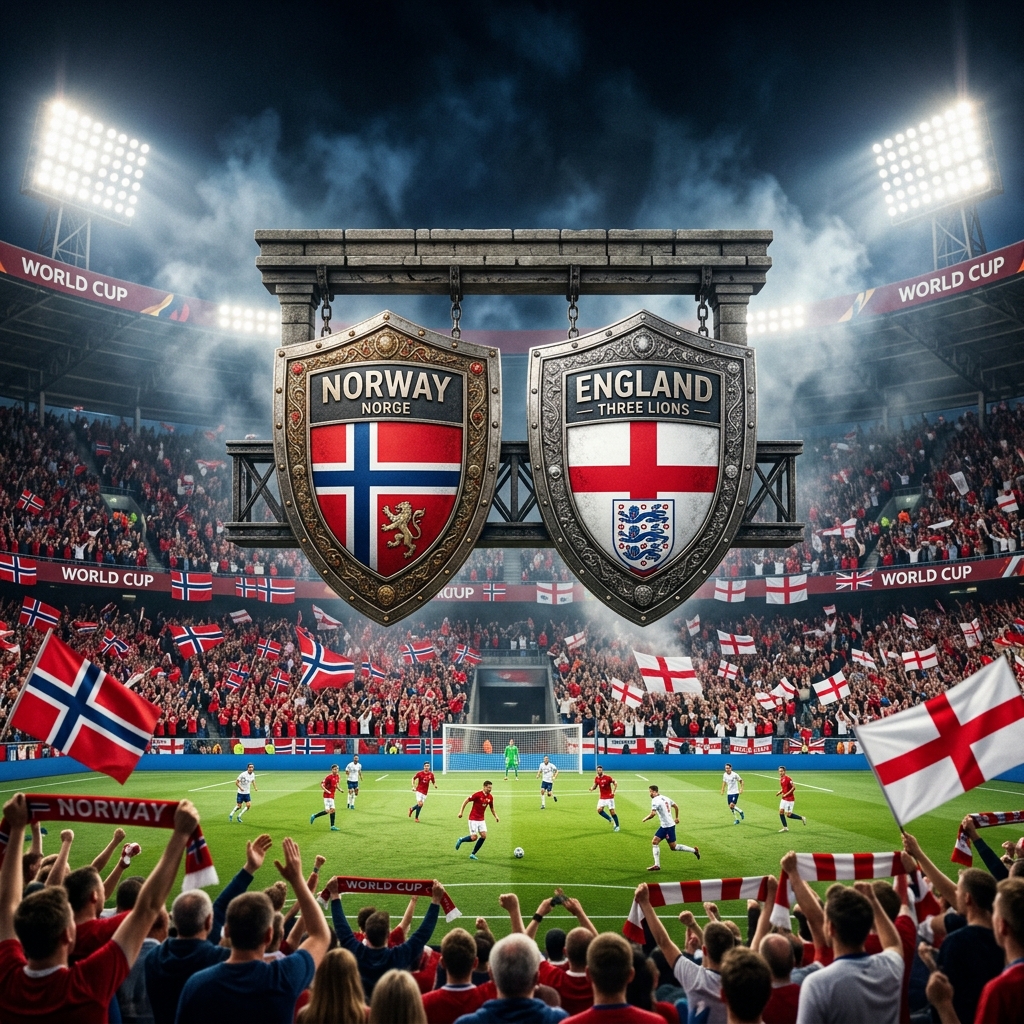
I have covered enough World Cup quarterfinals to know when a fixture carries more weight than its stage alone suggests, and this is one of them. Norway arrive in Miami on a run few outside their own camp saw coming, while England carry the kind of history that turns every round into its own small reckoning. What follows is my read on how these two very different stories collide on Saturday.
Norway vs England 2026 predictions ahead of a Miami quarterfinal
I want to be precise before anything else. This is not another group stage fixture to file away and forget. Norway and England meet in the quarterfinal of the 2026 World Cup, with both nations already well clear of the phase that decided who would even see this stage.
Saturday July 11 brings them together at Hard Rock Stadium in Miami, with kickoff set for the evening local time. Whoever survives this one walks straight into a semifinal against Argentina or Switzerland, so nothing about Saturday is a dress rehearsal. I always find that the weight of a single knockout tie sharpens every decision a coach makes, and this quarterfinal is no exception.
What makes this particular pairing so compelling to me is the shape of each journey. Norway are back at a World Cup for the first time in 28 years, a wait long enough to span an entire footballing generation. England, by contrast, arrive chasing something more specific, a first semifinal appearance since 2018, and I sense that history is pressing on both sides in very different ways tonight.
How each side reached the quarterfinal
Norway's path here tells its own story. They finished second in Group I, then needed a late win over the Ivory Coast to survive the round of 32 before producing the result of their tournament, a stunning victory over Brazil in the round of 16 that I still find remarkable given where this squad stood four weeks ago.
England took a different route entirely. They topped Group L without much drama, then had to come from behind against DR Congo before edging cohosts Mexico at the Azteca in a round of 16 tie that tested their nerve as much as their quality. Side by side, I see two very different profiles walking into Miami, Norway the tournament's great surprise, England the tested favourite who has still had to fight for every round.
Norway have waited a generation for a night like this
I find myself drawn back to a single fact whenever I think about Norway's road to Miami. This is only their fourth World Cup appearance in history, following brief showings in 1938 and 1994 and a genuine highlight in 1998, and then nothing at all for 28 years. What arrives on Saturday is not a footnote for this nation. It is the first quarterfinal Norway have ever reached in their entire World Cup history.
Norway at the World Cup before 2026
Norway's first appearance came in 1938, when they met eventual champions Italy in the opening round of a straight knockout format and pushed them all the way into extra time before falling 2 to 1. It remains one of the closer defeats a Norwegian side has handed a champion, and I think that detail gets lost too easily in a story this old.
Their return in 1994 carried a different kind of heartbreak. Drawn alongside Italy, Mexico and the Republic of Ireland, Norway lost only once in the group, yet still went home on goal difference, a cruel exit for a side that had done almost everything right. Four years later in 1998 came the moment most fans still associate with this generation's parents, a 2 to 1 win over Brazil that sent Norway through to the round of 16 for the only time before this tournament, where they eventually fell to Italy.
Between that night and this one sits 28 years of absence, long enough that an entire generation of Norwegian fans grew up without ever watching their country at a World Cup. Anyone wanting the complete record, match by match, can find it in our Norway World Cup archive, which carries every appearance from 1938 through to this run.
The players carrying Norway forward
Erling Haaland sits at the center of everything Norway have built here, and the numbers behind that statement are not exaggerated. He has scored in each of his first four World Cup appearances, a feat last managed by Gerd Muller 56 years ago, and that single comparison tells me more about the scale of what he is doing than any adjective could.
Around him, Martin Odegaard has quietly become the connective tissue of this Norwegian side, the player who turns defensive solidity into attacking moments. There is an added layer to Saturday given his club relationship with several England midfielders, a familiarity that cuts both ways once the ball is actually in play.
I want to stay close to what the record actually shows rather than guess at where this form is heading. Norway's attacking output has been documented match by match through this tournament, and that documented history is a better guide than speculation about a squad still writing its story.
Norway's road through this tournament
Group I gave Norway a genuine test, and they answered it well enough, beating Senegal and Iraq while losing only to France, results that were enough to send them through in second place with six points.
The round of 32 brought a narrower margin, a 2 to 1 win over the Ivory Coast that needed a late goal before Norway could relax, a reminder that this run has rarely come easily even when the scoreline suggests otherwise.
Then came the result that will define this tournament for Norway regardless of what happens next, a 2 to 1 win over Brazil in the round of 16. I do not think it is an overstatement to call it the signature result of their entire World Cup history, and it is the platform every conversation about Saturday now stands on.
England are still chasing a return to football's biggest stage
I keep coming back to one number whenever England appear at a World Cup, and it is 60. That is how long the wait has stretched since the win in 1966, a gap filled with enough near misses to build genuine pedigree without ever closing the story. England arrive in Miami carrying more World Cup history than Norway by any measure, yet that history is exactly what makes Saturday feel heavier for them, not lighter.
England at the World Cup before 2026
That 1966 triumph remains the single point every English World Cup conversation still measures itself against, a home win that has never been repeated despite decades of trying. What followed across the years since has been a pattern I find almost cyclical, spells of real promise interrupted by long stretches where England could not get past the earlier rounds at all.
The more recent era has been kinder, and the 2018 semifinal run stands as the clearest marker of that shift, England's first appearance in a World Cup final four since the 1990 tournament. Since then the story has repeated itself in a familiar shape, strong group form, a hard fought route through the knockout rounds, then a stall right around the quarterfinal stage before elimination.
That pattern is precisely what sits behind Saturday. Reaching a quarterfinal has become almost routine for this generation of England players. Turning it into a semifinal has not. Anyone wanting the complete record across every tournament can find it laid out in our England World Cup archive, covering every appearance from 1950 through to this one.
The players carrying England forward
Harry Kane and Jude Bellingham have carried an outsized share of England's attacking output through this tournament, and the split between them tells its own story about where this team's goals actually come from. Kane remains the senior figure of the pair, the striker whose finishing has repeatedly kept England alive at moments when the wider performance did not fully deserve it.
Bellingham has grown into something closer to the team's driving force as the rounds have gone on, a player who now looks less like the promising midfielder England once described him as and more like the player the entire attacking structure is built around. Between the two of them sits the large majority of England's goals this tournament, a concentration that I think is worth naming plainly rather than glossing over.
That same concentration is part of why questions persist about the defense behind them. England's backline has not offered the same certainty as their front line, and that gap between attacking quality and defensive control is a thread I want to hold onto, because it becomes central once we turn to what Saturday's result might actually depend on.
England's road through this tournament
Group L unfolded comfortably enough on the surface, wins over Croatia and Panama alongside a draw with Ghana that were enough to top the group, though the underlying performances carried more uncertainty than the results alone suggest.
The round of 32 asked a harder question. England found themselves needing a second half comeback against DR Congo, the first sign this tournament that their knockout form would not simply mirror their group stage ease.
Then came the round of 16 in front of a raucous home crowd, a 3 to 2 win over cohosts Mexico at the Azteca that stands as England's most dramatic result of the tournament so far. The night carried extra weight after Jarell Quansah's red card left England to see out the closing stages a man down, a suspension that now rules him out of Saturday entirely and adds one more layer to the defensive questions already surrounding this side.
What history says before Norway and England meet for the first time at a World Cup
I want to start with the fact that surprised me most while researching this fixture. Despite meeting in a World Cup quarterfinal, Norway and England have never once faced each other on this stage before. Every previous meeting between these two nations has come outside the tournament that will finally bring them together on Saturday.
That history is not short, even if it has stayed off the World Cup stage. The two sides have met 12 times across other competitions, and the record leans firmly toward England, who have won seven of those meetings against two wins for Norway, with three draws completing the picture.
Their most recent encounter came in 2014, a friendly at Wembley that England won 1 to 0. More than a decade has passed since, long enough that almost none of Saturday's starting players were involved in that earlier meeting, yet the result still stands as the last word in this rivalry until now.
What strikes me is the imbalance sitting underneath all of this. England have dominated the head to head across more than a century of fixtures between these countries, while Norway walk into Miami carrying more tournament momentum than at any point in their history. History and form are pulling in opposite directions here, and I think that tension is exactly what makes this quarterfinal worth watching.
| Category | Record |
|---|---|
| Total meetings | 12 |
| England wins | 7 |
| Norway wins | 2 |
| Draws | 3 |
| Most recent meeting | 2014 friendly, England 1 Norway 0, Wembley |
I should flag that individual results and dates for the remaining 11 meetings are not confirmed in the source data used for this piece, so I have kept the table to the overall record and the most recent match rather than list scores I cannot verify.
Norway vs England 2026 predictions built on odds and market sentiment
I approach this section as analysis rather than a tip sheet, because the goal here is to explain what the numbers say, not to push anyone toward a wager. Bookmaker consensus points firmly toward England, with Norway sitting as the clear underdog, and that framing lines up with almost everything the earlier sections of this piece have already established about pedigree and pressure.
What the odds imply
England's advancement odds have carried an implied probability close to 69 percent, which translates simply enough into a market view that England are the more likely side to reach the semifinal, though far from a guaranteed outcome. Norway's own advancement odds put their implied chance closer to one in four, a live possibility rather than a token underdog price.
The goals market tells a separate story worth pulling out on its own. Both sides have shown clear attacking tendencies through this tournament, and the total goals line has sat close to 2.5, a number that reflects how open both defenses have looked at times rather than any expectation of a cautious, low scoring night.
What I take from the moneyline and the goals market together is a picture of a favorite without a dominant edge. England are favored to win, but the market is not treating Norway as an afterthought, and the goals expectation suggests this is unlikely to be a quiet, defensive affair regardless of who comes out ahead.
What prediction markets suggest
Prediction markets typically frame outcomes as an implied probability drawn from real trading activity rather than a fixed bookmaker price, and where that data is available it can serve as a useful second reference point alongside traditional odds. At the time of writing I do not have confirmed prediction market figures specific to this fixture, so I want to flag that gap clearly rather than estimate a number I cannot stand behind.
Where bookmaker odds and prediction market sentiment do align on other fixtures, it tends to reinforce the wider consensus. Where they diverge, that gap can hint at information the broader betting market has not fully priced in yet, whether that is fitness news, tactical adjustments, or shifting public sentiment.
For Norway and England, the honest position is that the bookmaker consensus stands as the clearest available signal right now. I would rather say that plainly than manufacture a market comparison the data does not support.
A historical read on the result
Pulling this back to everything covered earlier in this piece, I see two threads running in opposite directions. History favors England clearly, both in their overall World Cup pedigree and in a head to head record that leans seven wins to two in their favor. Momentum favors Norway just as clearly, a team that has already beaten Brazil this tournament and arrives with nothing to lose in a way England, weighed down by 60 years of near misses, simply do not share.
Both sides have scored freely through this tournament, and neither defense has looked entirely settled, which is exactly what the goals market above appears to reflect. That combination points toward a match unlikely to be short on drama regardless of which side advances.
My honest read, without leaning on any single number as gospel, is that England's greater squad depth and tournament experience make them the more likely side to win this quarterfinal, while Norway's attacking threat through Haaland gives them a genuine path to another famous result if the match stays open. Either outcome would sit comfortably within everything history and form have told us so far.