What are the patches soccer players wear in 2026?
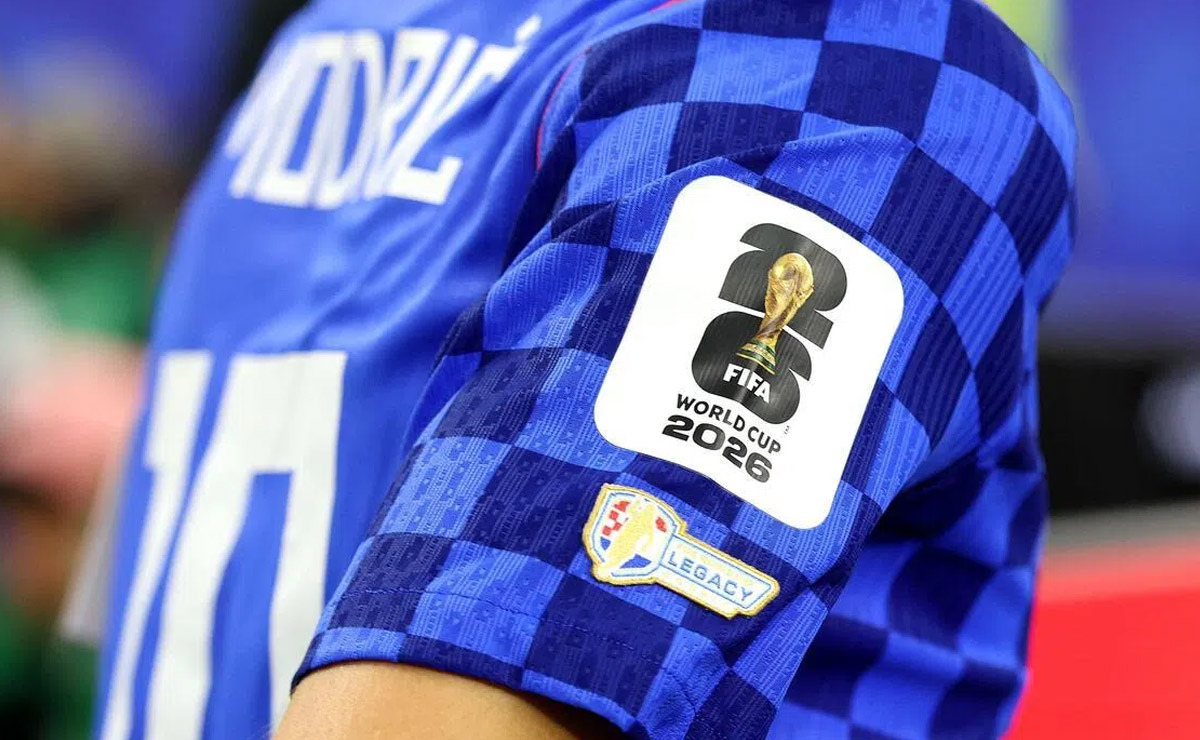
Nobody who watched football before this decade grew up thinking a torn piece of fabric could one day be worth more than the shirt itself. Yet that is exactly what has landed on players' sleeves at this tournament, five small emblems carrying more history and more future value than anything FIFA has stitched onto a kit before. What looks like decoration to the casual viewer is, in truth, a quiet revolution in how the game intersects with memory, ownership, and the long tail of a career still being written.
What are the patches soccer players wear at the World Cup
The patches appearing on shirts at the 2026 World Cup are not the emblems every team already carries. They belong to a set of five individual honors, each tied to a specific achievement and a specific player. Behind the design sits an ambition most fans have never noticed, turning a small piece of fabric into tomorrow's collectible card. Some of these patches will not reach a single collector for years, and that delay is entirely intentional.
How these patches differ from the official FIFA emblems
Every shirt at the tournament already carries an official FIFA patch, shown in black and white or in gold for previous champions. That emblem exists for one reason, to confirm the match belongs to the World Cup rather than a friendly. The tournament has run since 1930, and every edition since Korea Japan 2002 has made that patch mandatory on the right sleeve.
A second patch usually sits on the opposite sleeve. Over recent editions it has carried causes rather than results, campaigns such as Fair Play or Football for Hope. Neither of these two emblems holds any value beyond identification.
The five honor patches work on a completely different logic. They single out one player at a time rather than dressing the whole squad, and they were built with a future market already in mind.
Why these patches are removed after the final whistle
Once the referee blows for full time, a staff member approaches the player to collect the patch before it ever reaches the dressing room. That single detail separates this practice from anything football has done before. Nothing about the emblem is meant to stay on the shirt beyond the ninety minutes it represents.
A special adhesive makes the removal simple, sparing the shirt from any damage. That same ease of removal carries a risk of its own, since a patch applied too loosely can come away mid match rather than at the final whistle.
Both Scotland captain Andy Robertson and Australia goalkeeper Patrick Beach saw their patches work loose during play at this tournament. Small as the incident looks on camera, it points to how new and untested this whole process still is.
The history behind these collectible patches
Football did not invent this idea. Baseball got there first, and Topps only tested the concept fully during the 2023 MLB season, attaching a single debut patch to a small batch of rookie cards. What looked like a modest experiment three years ago has now landed on the biggest stage in world sport.
The instinct to attach something physical to a card is much older than that single season. Upper Deck began the practice back in 1996, cutting real fabric from worn uniforms rather than designing anything specifically for the purpose. Topps and Panini followed soon after, and the NFL joined the trend in 2025, with the NBA already announced as the next league to carry its own version.
Why Panini and not Topps controls the 2026 World Cup cards
Panini has held the exclusive rights to produce official World Cup collectible cards since long before this tournament, and that license runs through the 2030 edition. Anyone opening a sticker album or a pack this summer is holding a Panini product, not a Topps one.
FIFA found a way around that limit rather than waiting three more years for the rights to shift. Topps was allowed to place its five patches on shirts throughout the tournament anyway, then simply store every collected piece until it can legally turn them into cards. Gianni Infantino, FIFA's president, described Fanatics as an authentic reference point for innovation in collectibles, a comment that reads less like flattery and more like an explanation for why the exception was made at all.
The result is a strange kind of time capsule. A patch pulled from a shirt in the summer of 2026 will sit untouched in storage until 2031, at which point Topps plans to send the physical piece back to each player for an autograph before finally releasing the finished card to the public.
The five patch types and who earns them
Five separate honors can appear on a shirt at the 2026 tournament, each one earned rather than handed to every player alike. Golden Glove, Golden Boot, Golden Ball, debut, and legend recognize entirely different kinds of achievement, some tied to a single previous edition and others to an entire career. The debut patch stands apart from the rest, since it covers by far the widest pool of players and may end up being the one collectors chase hardest in years to come.
The golden glove patch
The golden glove patch belongs to whoever was voted the best goalkeeper at the previous World Cup, a recognition earned four years before it is ever worn again. It rewards a body of work across an entire tournament rather than a single outstanding save.
Emiliano Martinez wears it in 2026 after his performance at the 2022 tournament, where his penalty shootout heroics against France became one of the lasting images of that final. Thibaut Courtois carried the same honor at the 2018 tournament, recognition for a goalkeeper who barely put a foot wrong across seven matches in Russia.
The golden boot patch
The golden boot patch recognizes whoever finished as the top scorer at the previous World Cup, turning a single goal tally into a badge worn four years later. Only one player per edition can ever carry it.
Kylian Mbappe wears it in 2026 after his eight goals defined the losing final at the 2022 tournament. Harry Kane held the same honor in 2018 following his six goals in Russia, and James Rodriguez carried it in 2014 after his own six goal tournament in Brazil, proof of how far back this idea would have reached had it existed sooner.
The golden ball patch
The golden ball patch honors whoever was voted the outstanding player of the previous tournament, a subjective award that still carries enormous weight among voters and fans alike. It sits above every statistic a tournament can produce.
Lionel Messi wears it in 2026 after his performance at the 2022 tournament, where he lifted the trophy and the individual award in the same competition for the first time since Diego Maradona managed something similar in 1986. Luka Modric held it at the 2018 tournament, recognition for a midfielder who carried Croatia to their first ever final.
The legend patch
The legend patch is reserved for anyone who has featured at five or more World Cups, a threshold so demanding that only a handful of players in the sport's history have ever reached it. Longevity, not a single tournament, earns this one.
Five players carry it into the 2026 tournament, Luka Modric, Lionel Messi, Manuel Neuer, Cristiano Ronaldo, and Yuto Nagatomo, a group spanning several continents and two decades of the men's game. Our World Cup appearance records show just how rare this company is, and how much weight a fifth tournament adds to a career already built on the previous four.
The debut patch
The debut patch marks a single match rather than an entire rookie season, the exact moment a player's story at this level began. No previous football card has ever isolated a debut with this kind of precision.
Imagine one existing for Lionel Messi's first World Cup appearance, the substitute outing against Serbia and Montenegro on 16 June 2006. A single piece of fabric from that night would today be worth more than almost anything else in the sport's collectible history, simply for marking the exact beginning of a career that went on to rewrite the record books.
The players wearing patches worth watching at the 2026 World Cup
No patch heading into the 2026 tournament carries more speculative weight than the one stitched onto Lamine Yamal's shirt for his World Cup debut. It sits inside a growing conversation about what a single piece of fabric might be worth if the player wearing it becomes what many already expect him to become. Shirt swaps, loose adhesive, or a patch lost in the scramble after a match could all shrink an already tiny supply before it ever reaches a collector.
Lamine Yamal and the weight of a single debut
A debut patch only becomes valuable in hindsight, once the player wearing it has done something to justify the attention. Yamal is unusual because that hindsight already feels close at hand. Few teenagers arrive at a World Cup with this much expectation already attached to their name.
The clearest point of comparison is the Panini Mega Cracks card from Messi's rookie season in 2004 2005, which sold for 1.5 million dollars decades after it was printed. That price reflects everything Messi went on to become, not anything visible on the card at the moment it was released. A Yamal debut patch works on the same principle, except the fabric itself was worn during the exact match being celebrated, something no vintage sticker from Messi's era could ever claim.
A Ballon d'Or or a World Cup title would not simply add a line to Yamal's biography, it would immediately reshape what collectors are willing to pay for that single patch. The gap between a promising debut and a legendary one is exactly where this kind of memorabilia finds its value, and Yamal's career still has that gap wide open in front of it.
Why these patches are becoming collector history
Baseball has lived with memorabilia cards for three decades longer than football has, and that head start shows in how seriously the American market treats a single worn patch. Football is only now catching up to an idea that has already produced some of the most chased objects in sports collecting.
The most expensive football cards ever sold
The clearest proof of how intense this market can become came from baseball rather than football. When Paul Skenes debut patch card surfaced after his rookie season, the search for the single existing copy turned into a public spectacle, with his own team and even a late night host offering rewards just to see it. That frenzy is the closest preview football has for what a Yamal patch, or something like it, could eventually trigger.
Football already has its own record before a single World Cup patch card has even reached the market. Messi's rookie card from the Panini Mega Cracks 2004 2005 set remains the most expensive football card ever sold, a price built on scarcity as much as on the player himself.
A Cristiano Ronaldo card from 2018 and a Pele rookie card from the 1958 tournament complete the podium beneath it, both trading for sums that would have been unthinkable when either card was first printed. Exact resale figures for older cards can vary between reported sales, so the numbers below reflect the most widely cited prices rather than a single verified auction record.
| Player | Card edition | Reported price |
|---|---|---|
| Messi | Panini Mega Cracks 2004 2005 rookie card | 1.5 million dollars |
| Ronaldo | 2018 card | 1.35 million dollars |
| Pele | 1958 rookie card | 1.33 million dollars |
What the 2031 release means for collectors
Every patch collected during the 2026 tournament will eventually make its way back to the player who wore it, this time for a signature rather than a match. That single addition turns a piece of match worn fabric into something closer to a personally authenticated artifact.
The five year wait is not a bureaucratic accident, it is the direct result of Panini holding exclusive card rights through the 2030 tournament. Topps built its entire release strategy around that limitation rather than fighting it, banking the patches now and turning the delay itself into part of the story collectors will eventually pay for.
Fanatics executives have already said publicly that they expect football to become their largest sport in collectibles, and the patch strategy at this tournament reads like the opening move in that plan. A market that took three decades to fully form in baseball may need far less time to reach the same scale in the world's most watched sport.
The lasting story behind a piece of fabric
What began as a quiet experiment in baseball has landed on football's biggest stage with far more weight than anyone expected. A tournament built on ninety years of shared memory now carries five new, deliberately small honors, each one designed to outlive the match it was worn in. Golden Glove, Golden Boot, Golden Ball, debut, and legend turn individual achievement into something a fan can eventually hold, and that idea alone marks a genuine shift in how football intersects with collecting.
The wait until 2031 only sharpens the story rather than diminishing it. Every patch pulled from a shirt this summer already carries the weight of the match it represents, long before Panini's rights expire and Topps sends anything back to a player for a signature. Whether it is Yamal's debut, Messi's legend patch, or a name nobody has noticed yet, the value of these five honors will keep being written long after the final whistle in 2026. For everything else this tournament has produced, the Historical Soccer World Cup archive remains the place to explore every edition, every record, and every player who has ever worn this competition's colors.