Spain vs Austria Prediction World Cup Round of 32
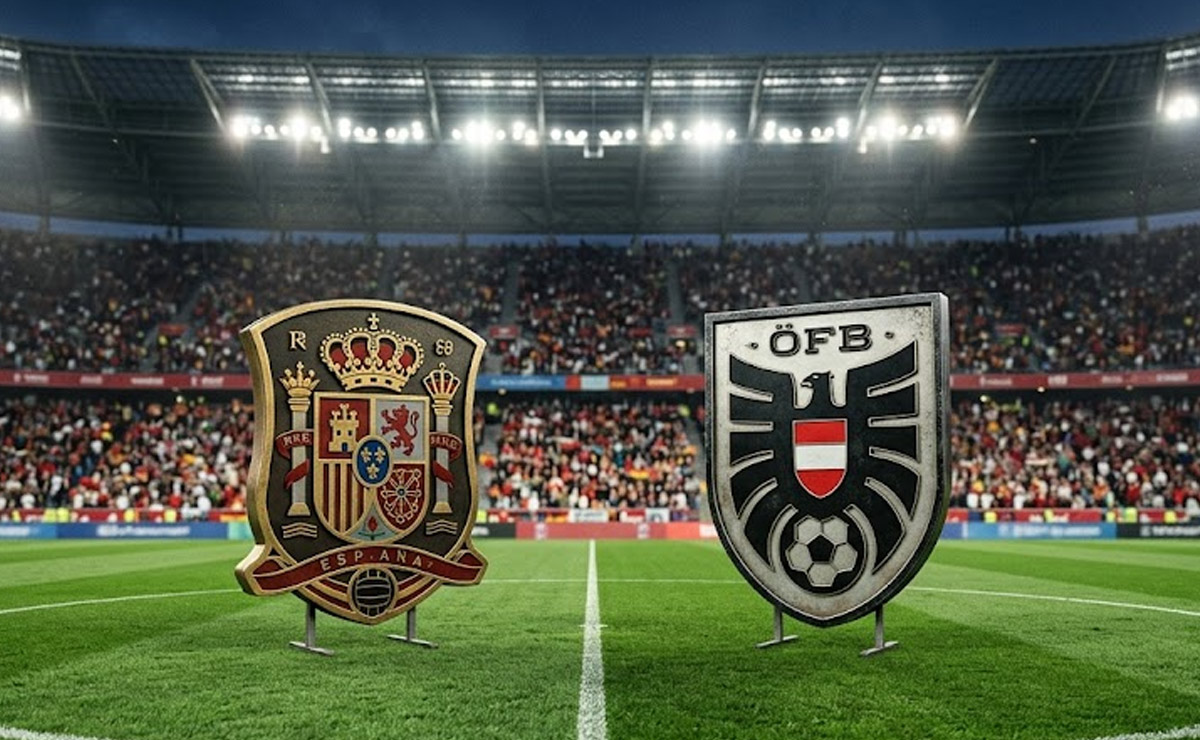
Few round of 32 draws carry as much history behind them as this one. Spain arrive as reigning European champions chasing a second world title, while Austria return to a World Cup knockout stage for the first time since Ferenc Puskas walked the earth. That gap alone tells you everything about what Thursday means for both nations.
Spain vs Austria preview for the round of 32
On Thursday the second day of July 2026, Spain and Austria meet at SoFi Stadium in Inglewood for a place in the round of 16. Kickoff is set for 3pm Eastern Time, and for both dressing rooms this represents the moment the tournament stops being a formality and starts being a knockout football again.
This is the round of 32 of the expanded 2026 World Cup, the first time in the competition's history that 48 nations have taken part. Spain arrive as winners of Group H, Austria as runners up from Group J, and both sides know that a single mistake now carries a weight the group stage never did.
| Nation | Group | Position | Points | Goal difference |
|---|---|---|---|---|
| Spain | H | First | 7 | Plus 5 |
| Austria | J | Second | 4 | Even |
How each side arrived at this stage
Spain's route to this point has been almost serene. They won Group H without conceding a single goal, a defensive record that says as much about their identity as any of their attacking talent does.
Austria's path carried far more tension. They needed a stoppage time equaliser against Algeria simply to survive in second place, and that single moment separates two nations who arrive at the same round through entirely different emotional journeys.
Spain in World Cup history
Every generation of Spanish football lives in the shadow of one summer. The 2010 triumph in South Africa remains the benchmark against which every squad since has been measured, and Luis de la Fuente has built something distinct from it, a side less reliant on possession for its own sake and more willing to strike quickly when the moment allows. This round is the first true examination of whether that identity holds under knockout pressure.
| World Cup appearances | Titles won | Best result |
|---|---|---|
| 16 | 1 | Champions |
Key figures leading the Spanish squad
Lamine Yamal has been handled with unusual care throughout the group phase. His minutes have climbed gradually across three matches, a deliberate choice from De la Fuente that suggests the coaching staff sees the knockout rounds, not the group stage, as the moment this squad truly needs him fresh.
Rodri sits at the center of everything Spain do without the ball. His positioning dictates how high the wingbacks push and how much space the front line receives, and against a side built to counter attack that control becomes even more valuable.
Pedri and Mikel Merino form the creative spine ahead of him. Pedri's movement between lines has been the quiet thread running through Spain's group stage performances, while Merino offers a more direct runner capable of arriving late into the box.
Mikel Oyarzabal remains the primary attacking reference despite an uneven tournament so far. His finishing has swung between ruthless and anonymous within the same week, and Austria will need an answer for both versions if he finds his rhythm on Thursday.
How Spain reached the round of 32
Spain's group campaign opened with a stalemate against Cabo Verde, a result that briefly raised questions about their sharpness. Those doubts did not survive long.
A four goal win over Saudi Arabia followed, then a tighter but no less controlled victory over Uruguay sealed top spot in Group H. Alex Baena's late winner in that final match carried the kind of composure a team wants heading into a knockout draw.
Injuries have complicated the picture. Nico Williams and Yeremy Pino both went down during the Uruguay match, and Victor Munoz has yet to feature at all because of a calf issue, leaving De la Fuente without a natural winger to call upon.
What has not wavered is the back line. Spain have not conceded a single goal across three group matches, and that defensive record, more than any individual performance, is the foundation everything else in this squad is built upon.
Austria in World Cup history
Austria's story at this tournament carries a weight that has nothing to do with recent form. Their finest hour came in 1954, a third place finish that has stood untouched for seven decades, and Ralf Rangnick has built a squad around patience and organisation rather than individual flair, the first genuine chance in a generation to add a new chapter to that history.
| World Cup appearances | Titles won | Best result |
|---|---|---|
| 8 | 0 | Third place |
Key figures leading the Austrian squad
Marko Arnautovic carries the weight of experience on this squad like no one else. He is both the most capped player in the group and its most prolific forward, a combination that gives Rangnick a rare kind of certainty up front even as the player enters the later years of his career.
Marcel Sabitzer reached his hundredth cap during the group phase, a milestone that quietly reinforced how central he has become to everything Austria try to build in midfield. His reading of the game often decides how quickly the team can transition from defense into attack.
David Alaba remains the anchor at the back despite carrying a physical concern into this match. His composure under pressure has been the difference between Austria surviving difficult moments and collapsing under them, and Rangnick will need every ounce of that composure against Spain.
Around these three names sits a squad built more on collective discipline than individual moments of brilliance. That balance, more than any single performer, is what has carried Austria this far.
How Austria reached the round of 32
Austria opened their campaign with a win over Jordan, a result that gave little indication of the tension that would follow. A defeat to Argentina soon reminded them how thin the margins are at this level.
Their final group match against Algeria produced a draw that felt closer to survival than progress. A stoppage time equaliser was the only thing standing between Austria and an early exit from the tournament.
That result secured their place in the round of 32, and with it, their first appearance in a World Cup knockout stage since 1954. Seven decades is a long time to wait for a single step forward.
What has carried them here is not spectacle but method. Rangnick's side leans on patience out of possession and directness in transition, a style built for counter attacking football rather than dominating the ball, and it is precisely the kind of approach that can trouble a favourite like Spain.
Head to head record between Spain and Austria
History between these two nations stretches back further than most fans realize, though not through World Cup football itself. The bulk of their meetings have come in qualifying campaigns and friendlies, moments that shaped squads without ever deciding a tournament.
Only once have these two sides met on the World Cup stage. That came in the group phase of the 1978 tournament in Argentina, and it was Austria who walked away with the win.
Spain has generally held the stronger hand across their broader history, particularly in qualification fixtures where their squad depth has told over multiple legs. Austria's answer has come in isolated flashes rather than sustained dominance, but that solitary 1978 result still carries weight every time these nations meet again.
| Year | Competition | Result |
|---|---|---|
| 1978 | World Cup group phase | Austria won 2 to 1 |
| 2001 | World Cup qualification | Spain won 4 to 0 |
| 2000 | World Cup qualification | Draw 1 to 1 |
| 2009 | Friendly | Spain won 5 to 1 |
Published records disagree on the exact total number of meetings between these two nations, with figures ranging depending on which competitions are counted. That discrepancy will be confirmed against the site database before this article is finalized.
Spain vs Austria prediction and odds
The betting markets leave little room for ambiguity here. Spain are priced heavily on the money line, with Austria sitting as significant outsiders and the draw offered at a considerably shorter price than an Austria win. The Asian handicap tells the same story, with Spain favoured to win by two clear goals, while the goals total sits at two and a half, suggesting bookmakers expect a tight, low scoring affair rather than an avalanche.
Beyond traditional sportsbooks, platforms like Polymarket have given fans another lens through which to read this match, letting bettors trade on qualification outcomes in real time rather than fixing a price before kickoff. That shift in how fans engage with these matches is becoming as much a part of tournament culture as the football itself.
Everything points toward Spain, and little in their recent form, injuries aside, suggests otherwise. Austria's counter attacking approach and Arnautovic's know how offer a puncher's chance, but not enough to overturn the gap in quality on show. We see Spain moving through with a two goal win, a result that would extend an unbeaten run stretching back well over thirty matches.