France vs Norway World Cup 2026 Predictions
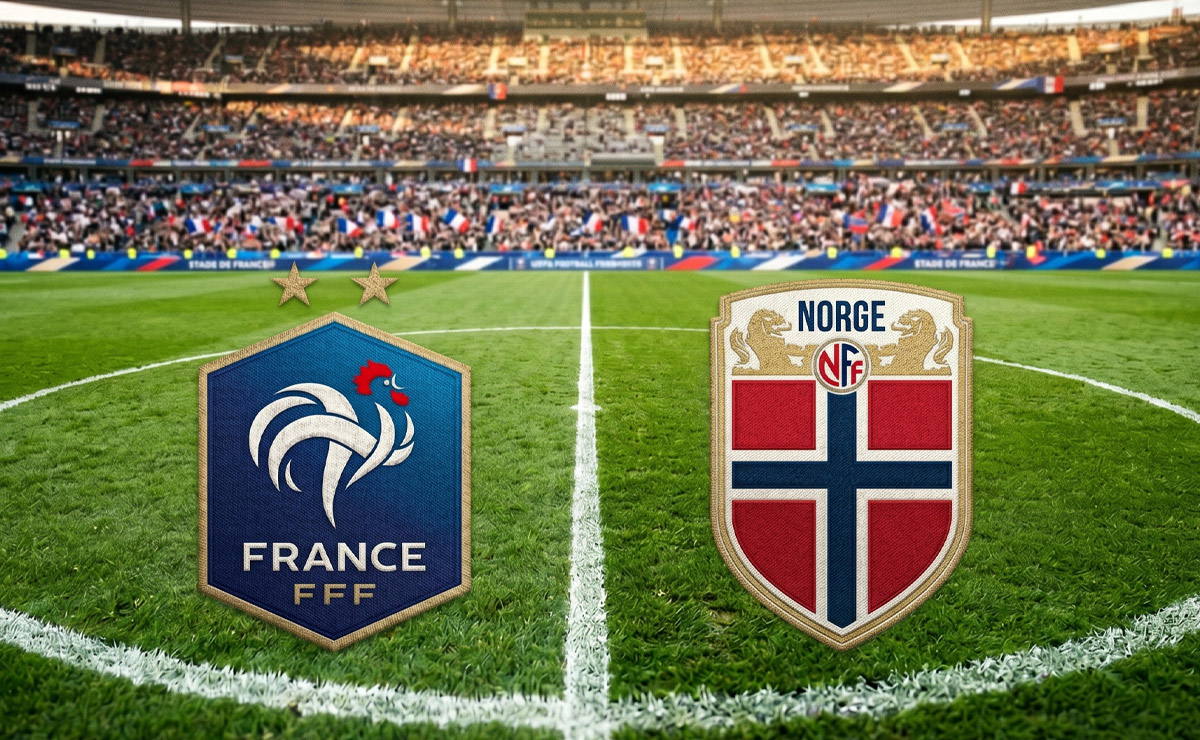
France and Norway meet on June 26, 2026 at Gillette Stadium in Foxborough, Massachusetts, in the final matchday of World Cup Group I. It is a fixture that carries real weight for both sides. France arrive as the world number one ranked nation and one of the tournament favourites. Norway return to the World Cup for the first time in 28 years, powered by the most prolific striker on the planet. What follows is a full breakdown of both teams, their histories at the tournament, how they line up against each other on paper, and where the prediction markets are pointing ahead of kick-off.
France vs Norway at the 2026 World Cup
France and Norway meet on June 26 at Gillette Stadium in Foxborough, Massachusetts, in what is the final matchday of Group I at the 2026 World Cup. By the time these two sides walk out onto the pitch, the stakes will already be written in the group table. France, widely expected to top the group, may already have their passage secured. Norway will almost certainly need a result to stay alive or to fight for top spot. There is no dead rubber between a team of this quality and an opponent coming back to the World Cup after 28 years of absence.
Group I is the most watched section in a tournament that has already broken every record for size. For the first time in history the World Cup features 48 nations, split across twelve groups of four, with the top two and the eight best third-placed teams advancing to the round of 32. France, Senegal, Norway and Iraq make up the toughest group in the tournament by average FIFA ranking, a draw that has been rightly called this edition's group of death. The expanded format keeps more teams alive for longer, but for Norway, navigating this group without slipping up against France will define their entire return to the tournament.
Gillette Stadium, home of the New England Patriots, holds close to 65,000 supporters and sits between Boston and Providence. France beat Brazil there in a March friendly, so for the reigning world number one side, the venue already carries a positive memory. For Norway, it will be the second time they have played there in the group stage, having opened against Iraq at the same ground on June 16. The two nations know exactly what they are playing for.
| Date | Stadium | City | Group | Phase | Match |
|---|---|---|---|---|---|
| June 26, 2026 | Gillette Stadium | Foxborough, Massachusetts | Group I | Group stage | Match 61 |
France at the 2026 World Cup
France arrive in the United States as the number one ranked team in the world and the clearest favourite to win the tournament outright. Two World Cup titles, four finals reached, and a generation of players that has delivered consistently at every major tournament for nearly a decade. There is no other team in this group that carries that weight of expectation, and no other team in 2026 that feels quite as inevitable.
France's World Cup history
France were present at the very first World Cup in 1930, one of only four European sides to make the trip to Uruguay, and they scored in the opening match of the tournament against Mexico. It took them nearly seven decades to convert that long history into a title, but when they did, they did it twice. The 1998 triumph on home soil, with Zinedine Zidane heading in two corners against Brazil in the final, remains the defining moment for an entire generation of French supporters. Twenty years later, a new generation produced the same result in Russia, beating Croatia 4–2 to confirm that the 1998 side was not a golden accident.
What makes France's recent record so remarkable is the sustained consistency rather than any single peak. Between 2018 and 2022, Les Bleus won the trophy, reached the semi-finals, and then lost a final on penalties to Argentina after Kylian Mbappé scored a hat-trick in the last twenty minutes. No other nation in this century has reached three consecutive World Cup finals or semi-finals with that kind of frequency. They enter 2026 not as a team trying to recapture something lost but as a team that simply has not yet been stopped.
| Year | Stage reached | Result |
|---|---|---|
| 1930 | Group stage | Eliminated |
| 1934 | Round of 16 | Eliminated |
| 1938 | Quarter-finals | Eliminated |
| 1954 | Group stage | Eliminated |
| 1958 | Third place | Bronze medal |
| 1966 | Group stage | Eliminated |
| 1978 | Group stage | Eliminated |
| 1982 | Fourth place | Fourth |
| 1986 | Third place | Bronze medal |
| 1998 | Winners | Champions |
| 2002 | Group stage | Eliminated |
| 2006 | Runners-up | Finalists |
| 2010 | Group stage | Eliminated |
| 2014 | Quarter-finals | Eliminated |
| 2018 | Winners | Champions |
| 2022 | Runners-up | Finalists |
| 2026 | TBD | TBD |
Key players to watch for France
Kylian Mbappé enters this tournament in a position he has never occupied before: as the undisputed leader of the team, not just its most dangerous forward. He is 27 years old, a Real Madrid captain, and widely considered the best player on the planet. His previous World Cups were spent in the shadow of a winning collective or in the role of the brilliant young threat inside a Griezmann-anchored system. In 2026, the team is built around him, and every tactical decision Didier Deschamps makes in his final tournament in charge will reflect that.
Antoine Griezmann brings something no one else in the squad can offer: three World Cups already played, a winner's medal from 2018, and the experience of leading France through the most difficult moments in Qatar. He reads the game at a pace no younger player in the squad can yet match, and his work off the ball remains essential to how France defend from the front. Alongside him, Ousmane Dembélé arrives in the summer of 2026 as reigning Ballon d'Or winner, which adds a layer of individual pressure and individual quality that makes this French attack genuinely frightening to face.
The defensive structure is equally formidable. Dayot Upamecano and the Hernández brothers anchor a backline with Champions League-level experience throughout, while Eduardo Camavinga and Khephren Thuram provide the midfield energy that protects it. Deschamps has built a team that is hard to score against even when the opposition decides to sit deep, which is precisely what Norway will attempt on June 26.
How France qualified for 2026
France were placed in UEFA qualifying Group D alongside Ukraine, Iceland and Azerbaijan, a four-team group that began in September 2025. They topped it without ever being seriously threatened. The campaign produced seven wins and a single draw, a result away to Iceland that ended 2–2, with 22 goals scored and only 5 conceded across the eight matches. Mbappé was again the driving force in front of goal, and the qualifying round that confirmed their place was a 4–0 home victory over Ukraine in November 2025, with Mbappé scoring twice and Michael Olise and Hugo Ekitike adding the rest.
Ukraine finished second and advanced to the playoffs, where they were eventually eliminated. France, already through weeks before the final matchday, used the last rounds to rest key players and test depth. They arrived at the tournament draw in December 2025 as the highest-ranked European side and were immediately placed into Group I alongside Senegal, Iraq and Norway.
Norway at the 2026 World Cup
Norway return to the World Cup for the first time since 1998, and no one in that dressing room has ever experienced anything like this before. Twenty-eight years is a long time in football. Long enough for an entire generation of players to grow up, reach their peak, and retire without ever wearing the national shirt at a World Cup. The squad that arrives in the United States this summer carries the weight of that absence, and also the excitement of finally ending it.
Norway's World Cup history
Norway's relationship with the World Cup has never been simple. They were present at the very beginning, travelling to the 1938 tournament in France where they faced Italy in a single-match knockout round and lost 2–1 after extra time, with Arne Brustad scoring what remains one of the most celebrated goals in Norwegian football history. They would not return for 56 years. When they finally came back in 1994, they went out at the group stage despite remaining unbeaten, eliminated on goals scored after all four teams in Group E finished level on points and goal difference. It remains one of the more painful exits in World Cup history, decided by arithmetic rather than football.
The 1998 tournament in France brought their finest hour. Norway finished second in a group containing Brazil, Morocco and Scotland, drawing the first two and then producing a result that still stops conversations in Oslo: a 2–1 comeback win over Brazil, with Kjetil Rekdal scoring a penalty in the final minute. They were knocked out in the round of 16 by Italy, just as they had been six decades earlier, but the defeat did nothing to diminish what had come before. After Euro 2000, Norwegian football entered a long darkness. They missed twelve consecutive major tournaments and failed to qualify for any World Cup between 1998 and 2026.
The 2026 edition will be their fourth World Cup appearance and first in 28 years. Norway is also the only national team in history never to have lost to Brazil, a record of two wins and two draws in four encounters that no other side can match.
| Year | Stage reached | Result |
|---|---|---|
| 1938 | Round of 16 | Lost to Italy (2–1 aet) |
| 1994 | Group stage | Eliminated on goals scored |
| 1998 | Round of 16 | Lost to Italy (0–1) |
| 2026 | TBD | TBD |
Key players to watch for Norway
The entire football world is watching Norway because of Erling Haaland, and that is not an exaggeration. He is the most lethal finisher of his generation, already Norway's all-time leading scorer at 25 years old, and he arrives at this tournament having scored 16 goals in eight qualifying matches, finding the net in every single one of them. Five of those goals came in a single evening against Moldova. No other player in European qualifying came close to that number, and no other team in Group I, not France or Senegal, has a weapon of comparable individual destructiveness.
Martin Ødegaard is the other half of what makes Norway dangerous. The Arsenal captain controls Norway's tempo, releases Haaland at the right moment, and provides the creative intelligence that stops the team from becoming purely a counter-attacking vehicle. His fitness coming into the tournament is the single biggest injury concern for Ståle Solbakken, who knows the difference between Norway with and without Ødegaard in full flow is not marginal. Around those two, Antonio Nusa at RB Leipzig provides the pace and directness to stretch any defensive block, while Alexander Sørloth at Atlético Madrid offers a physical alternative up front that gives Norway a completely different look when they need one.
There is also a psychological dimension to how this squad approaches June 26. Most of these players have never played at a World Cup. For Haaland and Ødegaard, the two men the world already watches every week at the highest level of club football, this is the stage that has been missing from their careers. That sense of occasion will not paralyse them. But it will make every decision feel heavier, and every moment against France carry a meaning that goes beyond the scoreline.
How Norway qualified for 2026
Norway's qualifying campaign was one of the most dominant in European history. Drawn into UEFA qualifying Group I alongside Italy, Israel, Estonia and Moldova, Ståle Solbakken's side won all eight matches, scored 37 goals and conceded just five. Only England matched that record of eight wins from eight across the entire European qualification process. The standout result was an 11–1 demolition of Moldova in September 2025, the night Haaland scored five and Thelo Aasgaard added four more, before Norway went to the San Siro in November and beat Italy 4–1 to seal qualification and top spot simultaneously.
Haaland's 16 goals across the campaign made him the top scorer across all of European qualifying by a distance. He scored at least once in every match, including the brace in Milan that confirmed Norway's place in the tournament. "It's indescribable," he told Norwegian television that night. "Absolutely insane. The way we did it is absolutely incredible."
Solbakken, who has managed the national side since 2020, had been hired specifically to return Norway to a major tournament after more than two decades away. He achieved it with a year to spare, allowing the squad a full preparation window before travelling to the United States. Norway arrived at the December 2025 draw already knowing they had qualified as group winners with a perfect record, and were placed immediately into what became the tournament's toughest group.
France vs Norway head to head
These two nations have met rarely enough that the June 26 fixture at Gillette Stadium will feel genuinely uncharted for both squads. Across the full recorded history of men's international football between France and Norway, the sides have played no more than a handful of times, and never in a World Cup. The broader picture, counting competitive qualifiers from the 1960s and the occasional friendly across the decades, points to a roughly balanced overall record, with neither side having established clear dominance over the other. France have tended to prevail in more recent encounters, but the two most notable older results still belong to Norway: a 1–0 away win in a 1968 World Cup qualifier played in Strasbourg, and an earlier result from the 1920s that the French federation itself preferred to forget. This is not a rivalry with deep accumulated weight. It is two nations meeting properly at a World Cup for the first time.
The most recent competitive encounter between the sides came in a 1969 World Cup qualifier, when France ran out 3–1 winners in Oslo. In the modern era, the clearest data point is a pre-World Cup friendly played in Paris on May 27, 2014, which France won 4–0 at the Stade de France, with goals from Paul Pogba, Olivier Giroud twice, and Loïc Rémy. Norway were not heading to Brazil that summer and fielded a relatively inexperienced side, so the result carries limited analytical weight, but it nonetheless represents the only meeting between these two teams in the last half-century for which a confirmed scoreline is readily available. The 2026 fixture will be the first time they have met in a competitive tournament at senior level.
| Year | Competition | Result | Winner |
|---|---|---|---|
| 1964 | WC Qualifier | France 1–0 Norway | France |
| 1965 | WC Qualifier | Norway 1–0 France | Norway |
| 1968 | WC Qualifier | France 0–1 Norway | Norway |
| 1969 | WC Qualifier | Norway 1–3 France | France |
| 1970 | Euro Qualifier | France 3–1 Norway | France |
| 2014 | Friendly | France 4–0 Norway | France |
France vs Norway predictions
The market has had months to form a view on this group, and it has not wavered. France are the clear favourite to win Group I and to control the match on June 26. Norway are given a meaningful but secondary chance. The individual match lines have not yet opened at the time of writing, but the group-level odds and prediction markets tell the story well enough to work with.
What the odds say
Across the major US sportsbooks, France are priced between -235 and -250 to win Group I outright, which translates to an implied probability of roughly 70 to 71 percent. Norway sit second in the group winner market at around +275 to +280, implying approximately 26 percent. Those are group-level figures, but they reflect how the market prices the head-to-head dynamic between these two sides. On Polymarket, the real-money prediction market that has generated over one billion dollars in trading volume on the 2026 World Cup, France are the outright tournament favourite at 18 percent, and the Group I advancement market has France at 72 percent to top the group against Norway's 21 percent. The gap is meaningful, but it is not a foregone conclusion.
⚠️ Individual match odds for Norway vs France on June 26 had not yet opened at major sportsbooks at the time of publication. The table below reflects group-level implied probabilities and should be updated with confirmed match lines as the fixture approaches.
| Outcome | Market | Implied probability |
|---|---|---|
| France to win Group I | BetMGM, DraftKings, FanDuel | approx. 70% |
| Norway to win Group I | BetMGM, DraftKings | approx. 26% |
| France to win the tournament | Polymarket | 18% |
| France top of Group I | Polymarket group advancement | 72% |
| Norway top of Group I | Polymarket group advancement | 21% |
Our France vs Norway prediction
The central duel that will decide this match is not a tactical one. It is a question of which of the two best players on the pitch has the bigger impact on the day. Haaland against the French centre-backs is the most dangerous individual matchup in Group I. He scored 16 times in eight qualifiers. He scores in almost every game he plays. France's defensive line, anchored by Upamecano and one of Saliba or Konaté, is among the most experienced in the tournament, but no backline in world football has found a reliable way to simply switch Haaland off. On the other side, Mbappé against Norway's defence is equally alarming for Solbakken, who knows his side's vulnerabilities in transition and in the press. France beat Brazil 2-1 at this exact stadium in March. Norway lost to the Netherlands and drew with Switzerland in their most recent friendlies against quality opposition.
The contrast in styles gives this match a particular shape before a ball is kicked. Norway will look to press high, win the ball early, and feed Haaland quickly in behind. France will look to control possession, use Dembélé and Olise to stretch the backline, and find Mbappé in the channels. The problem for Norway is that France are one of the few teams in the world that are both technically superior and physically capable of handling the direct approach. The form line, the squad depth, the experience of playing deep into knockout rounds, and the familiarity with Gillette Stadium all point in the same direction. A France win is the most probable outcome. A 2-1 scoreline reflects both the weight of French quality and the very real threat that Haaland represents for any defensive unit he faces. Norway will not come to Foxborough just to survive.