Algeria vs Austria Predictions 2026 World Cup
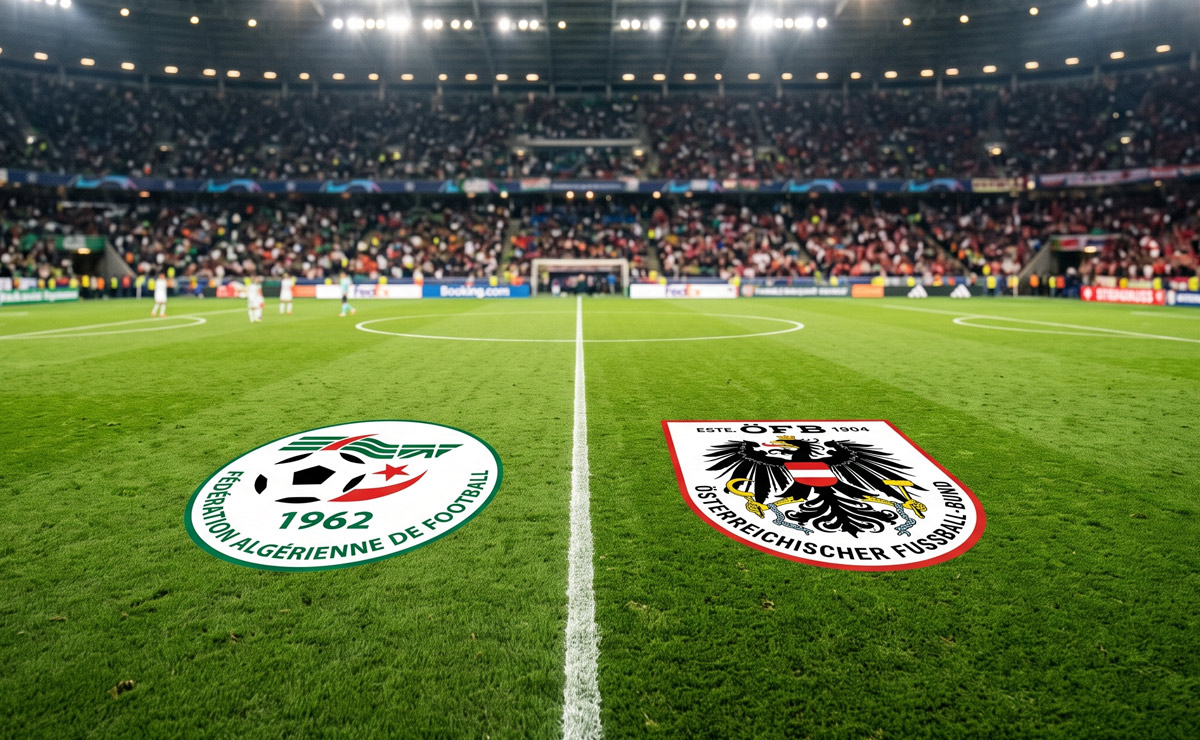
Few matches in the 2026 group stage carry as much history beneath the surface as this one. Algeria and Austria meet in Kansas City on Saturday night with qualification on the line, a shared past that has never been fully resolved, and a generation of Algerian footballers chasing something their predecessors were denied forty-four years ago.
Algeria vs Austria at the 2026 World Cup
Saturday's Group J finale at GEHA Field at Arrowhead Stadium in Kansas City is one of the most loaded matches of the opening round. Algeria and Austria both arrive on three points, separated by nothing more than goal difference, and everything about the knockout stage picture hinges on what happens between them.
The situation is simple enough on paper. A win for either side books an automatic place in the round of 32 as group runners-up. A draw keeps Austria comfortable and leaves Algeria in the hunt as a potential best third-placed team, depending on results elsewhere. Neither outcome is guaranteed to satisfy, and both teams know exactly what is at stake before a single whistle is blown.
What makes this more than a routine group decider is the history sitting beneath the surface. These two nations have met at a World Cup before, and the memory of that encounter has never fully faded in Algeria. Forty-four years on, Kansas City carries weight that no set of current standings can fully explain.
Algeria at the World Cup — history, key figures and the road to 2026
Algeria have never been a permanent fixture at the World Cup, which is precisely what makes each appearance feel so charged with meaning. When they walk out in Kansas City, it will be only the fifth time in history that the Fennecs have stood on football's biggest stage.
Algeria's record at the World Cup finals
Their debut in 1982 produced one of the great upsets in World Cup history — a 2–1 victory over West Germany that should have carried them through. It did not, for reasons that had nothing to do with football. Four years later in 1986 they exited in the group stage, and two long absences followed before they returned in 2010 and again in 2014. That 2014 campaign in Brazil remains the peak: a tense round of 16 encounter against Germany, level at 90 minutes, before extra time finally broke Algerian hearts in a 2–1 defeat.
The 2026 tournament is only their third appearance in the 21st century, and the weight of that 2014 near-miss still shapes how this generation is measured. Reaching the knockout stage again would not simply be progress — it would be confirmation that Algeria belongs among the teams that matter at this level.
| Edition | Stage reached | Notable result |
|---|---|---|
| 1982 | Group stage | 2–1 win over West Germany |
| 1986 | Group stage | Eliminated without a win |
| 2010 | Group stage | Drew with England, eliminated on goal difference |
| 2014 | Round of 16 | Lost 2–1 to Germany after extra time |
| 2026 | Group stage (ongoing) | 2–1 win over Jordan |
The players carrying Algeria in 2026
At 35, Riyad Mahrez remains the axis around which Algeria's attack is built. His experience, his ability to manufacture something from nothing in tight spaces, and his reading of the game at this level make him irreplaceable — and with Mohamed Amoura sidelined through a hamstring injury sustained against Argentina, Mahrez carries even more of the creative burden than usual.
Amoura's absence is significant. He scored 10 of Algeria's 24 goals during CAF qualifying and had been their most dynamic forward threat heading into the tournament. Without him, the Fennecs have had to find other ways to hurt opponents, and against Jordan they did exactly that.
Amine Gouiri and Nadir Benbouali were the two goalscorers in that 2–1 win, and their performances offered real encouragement. Gouiri in particular showed the kind of movement and composure in the final third that Algeria will need again if they are to get anything out of Saturday's match.
How Algeria arrived at this tournament
Vladimir Petkovic took charge of a squad that qualified with genuine conviction through CAF, with Amoura's goals providing the cutting edge that so often separated Algeria from the rest of the continent. The road to the United States was not without friction, but the quality in the group was never seriously in doubt.
Their opening match in 2026 brought a defeat to Argentina, a result that surprised no one given the opposition but still raised questions about how the Fennecs would respond. The answer came against Jordan — a match in which they conceded first and still found a way to win 2–1, something Algeria had never managed in any of their previous 11 attempts at a World Cup when falling behind.
That reversal of fortune matters as much psychologically as it does statistically. A team that knows it can come from behind is a different proposition entirely, and Petkovic's side will carry that belief into every minute against Austria.
Austria at the World Cup — history, key figures and the road to 2026
Austria are not a name that fills group stage draw rooms with fear, but they are a nation with genuine World Cup history — history that had been gathering dust for nearly three decades before Kansas City came along.
Austria's World Cup record and long absence
The peak came early. Austria reached the semi-finals in both 1934 and 1954, finishing third in Bern with a generation of players that genuinely belonged among the best in the world. What followed was a long and uneven story of qualification campaigns, occasional appearances, and a gradual fade from the tournament's main stage. Their last appearance before 2026 was France 1998, meaning an absence of 28 years — longer than most of their current squad have been alive.
That gap does not diminish what Austria once were. It simply makes the return feel more significant, both for the federation and for a fanbase that has spent a long time watching World Cups from a distance. Ralf Rangnick has given them a reason to believe that this is not a one-tournament comeback.
| Edition | Stage reached | Best result |
|---|---|---|
| 1934 | Semi-finals | Third place |
| 1954 | Semi-finals | Third place |
| 1958 | Group stage | Eliminated in group |
| 1978 | Group stage | Eliminated in group |
| 1982 | Group stage | Eliminated in group |
| 1990 | Round of 16 | Lost to Czechoslovakia |
| 1994 | Group stage | Eliminated in group |
| 1998 | Group stage | Eliminated in group |
| 2026 | Group stage (ongoing) | Win over Jordan |
The players Ralf Rangnick relies on
Marko Arnautovic is 37 years old and has been carrying Austria's goalscoring legacy on his back for the better part of a decade. He is the nation's all-time leading scorer, and when he came off the bench to seal the win against Jordan, it felt entirely appropriate — the old warhorse delivering when the moment demanded it. Whether Rangnick starts him against Algeria or deploys him as an impact substitute again remains one of the key tactical questions ahead of Saturday.
David Alaba anchors the defensive line with the authority of someone who has played the biggest club matches in European football. Xaver Schlager and Marcel Sabitzer provide the engine in midfield — two players comfortable in both the pressing game Rangnick demands and the more measured build-up phases that tournament football occasionally requires.
Perhaps the most intriguing subplot in Austria's squad is Carney Chukwuemeka, the Borussia Dortmund midfielder who switched his international allegiance from England to Austria. Still young, still finding his footing at this level, he represents the kind of talent that could define where this generation of Austrian football ends up going.
How Austria arrived in 2026
Rangnick has been building this project with unusual consistency for an international manager, and the results in qualifying reflected that. Austria arrived in the United States as one of European football's more credible dark horses — organised, hard to beat, and capable of hurting teams on the counter.
The tournament itself has offered a mixed picture. The win over Jordan was professional if not always convincing, with Austria struggling to break down a defensive block before Arnautovic settled the matter late on. Against Argentina, the scale of the task proved too much, and a 1–0 defeat was arguably a flattering scoreline given Messi's dominance of the contest.
The pattern that concerns Rangnick most is Austria's difficulty when facing sides that sit deep and invite pressure. Algeria, even without Amoura, will not play on Austria's terms if they can help it. That tactical tension — between a team that wants to press and a team that wants to absorb — could define the entire match.
Algeria vs Austria — what history tells us
These two nations have met at a World Cup before. And the circumstances of that encounter, and everything that followed from it, make Saturday's match in Kansas City something considerably more layered than a routine group decider.
The 1982 World Cup meeting
Spain 1982 was Algeria's first World Cup, and they announced themselves with one of the great upsets of the modern era — a 2–1 win over West Germany in their opening match. Days later, they faced Austria in the group stage and lost 2–0, with Walter Schachner and Johann Krankl doing the damage. It was a clean, professional victory for Das Team, and under any other circumstances it would be nothing more than a footnote.
What followed transformed it into something else entirely. Algeria finished the group with a record that should have carried them through, and their fate rested on the final match between West Germany and Austria — a game Austria needed only to avoid losing by more than two goals to qualify alongside their opponents.
The shadow of Gijón
What happened in Gijón on June 25, 1982 became one of the most shameful episodes in World Cup history. West Germany scored early, and both teams then played out the remaining 80 minutes in near-total passivity — a result that suited them both perfectly and sent Algeria home despite the Fennecs having done nothing wrong. The match became known as the Disgrace of Gijón, and its consequences were permanent: FIFA introduced simultaneous kick-offs for all final group stage matches at every subsequent tournament, a rule that now governs the very game Algeria and Austria are about to play.
For Algerian supporters, Austria is not simply an opponent. They are the other half of a story that has never been properly resolved — the team that benefited, directly or indirectly, from one of football's most notorious acts of collusion. Forty-four years have passed, but the weight of Gijón will be present in Kansas City on Saturday whether either side chooses to acknowledge it or not.
Head to head record across all competitions
Algeria and Austria have met rarely across the full span of their international histories, which makes the 1982 encounter carry even more significance — it remains the defining reference point between these two nations. The overall head to head record is narrow and lopsided toward Austria, though the sample size is small enough that historical form offers limited predictive value for what happens Saturday.
| Played | Algeria wins | Draws | Austria wins |
|---|---|---|---|
| 3 | 0 | 1 | 2 |
Head to head data based on available historical records. Friendly and competitive fixtures included.
Algeria vs Austria predictions for June 27
Every number pointing at this match tells the same story. A draw is not just the likeliest outcome — for at least one of these teams, it may quietly be the preferred one.
What the odds say
The Kalshi moneyline has Austria at +194, the draw at +133, and Algeria at +335. That draw price — shorter than you would normally expect for a match between two evenly matched sides — reflects something beyond form. The market has priced in the group stage context directly. On Polymarket, Austria sits at 34% implied probability and Algeria at 24%, which leaves the draw occupying the majority of the remaining probability. Over $379,000 in volume has been traded on the Algeria win market alone, with the largest single position a $10,000 bet — significant engagement for a group stage match, driven almost entirely by the qualification stakes.
Both sets of odds tell the same story from different angles. Austria are slight favourites to win, Algeria are significant underdogs, but the draw is where the weight of the money concentrates. When the market agrees with the mathematics of the group table, it is usually worth paying attention.
Why a draw is the most likely outcome
A draw gives Austria automatic qualification as group runners-up. It leaves Algeria in serious contention as a best third-placed team, depending on how the rest of the groups resolve — a genuine possibility given the expanded 48-team format of 2026. Neither side has a compelling reason to chase a result that forces the other team to react, and both coaching staffs will have done the arithmetic well before kick-off.
The history of tournament football offers occasional reminders of what happens when two teams find themselves in this situation — matches that begin with competitive intent and quietly settle into something more convenient. The Disgrace of Gijón in 1982 is the most notorious example, and the fact that Algeria were its victims adds a particular tension to any suggestion that Saturday could follow a similar pattern. Whether this match stays open or closes down will depend on who scores first. A goalless first half makes a measured, low-scoring draw far more probable than either team would publicly admit.
Our prediction for Algeria vs Austria
The tactical balance favours containment over ambition. Austria struggle against teams that sit deep, Algeria are without their most dynamic forward in Amoura, and both sides know exactly what a point means before a ball is kicked. The conditions are close to ideal for a match that produces little and decides much.
The most likely scoreline is 1–1, with both teams finding the net before the game settles into its inevitable equilibrium. For Algerian supporters, even that outcome carries a weight no scoreline can fully contain — a nation that was robbed in 1982 by a result involving these same opponents, now standing one point away from the knockout stage their history has long demanded. Whatever happens at Arrowhead Stadium, Saturday will be remembered in Algeria long after the 2026 tournament ends.
Explore more World Cup history on Historical Soccer
This match sits inside one of the great ongoing stories in international football — the pursuit of knockout stage football by nations for whom a World Cup appearance is never guaranteed. For a deeper look at the teams, tournaments, and records behind everything discussed here, the Historical Soccer World Cup section covers every edition from 1930 to 2026, with full match data, group stage records, and team histories across all 48 nations in this tournament.
From Algeria's debut in 1982 to Austria's long years of absence and return, the numbers behind these two nations tell a story that goes well beyond Saturday night in Kansas City. Explore the full Algeria and Austria World Cup records, and follow every result from the 2026 group stage through to the final.